



A client of mine in Asheville brought in a six-year-old Golden Retriever named Bowie last spring because his wife said the dog was “breathing weird” while watching television. Bowie wasn’t coughing. He wasn’t visibly sick. He just had a faint, almost apologetic raspiness when he lay on his side, and his exercise tolerance had quietly dropped from two-mile hikes to half-mile shuffles over about four months. His owners had switched him to a boutique grain-free formula three years earlier on the recommendation of a pet store employee who said it would “help with his coat.”
The echocardiogram showed a moderately dilated left ventricle and reduced systolic function. His taurine level came back low. We changed his diet to a formula with traditional grains and a more conventional protein base, supplemented taurine while we waited for follow-up imaging, and six months later his heart function had measurably improved. Bowie got lucky. Not every dog in the FDA’s investigation files did.
This article isn’t a verdict on grain-free food. The science isn’t settled enough for verdicts. It’s a clear walkthrough of what the FDA actually said, what dilated cardiomyopathy is, what the proposed mechanisms look like, and how to make a sensible decision for the dog in front of you without being either alarmist or dismissive.
What the FDA actually investigated, and what they actually said
The story most pet owners have heard is some compressed version of “the FDA found grain-free food causes heart disease.” That isn’t quite what happened, and the compression has done real damage to how the public reads the evidence.
The timeline matters. In July 2018, the FDA issued its first public alert noting that the agency had received reports of canine dilated cardiomyopathy (DCM) in breeds not historically predisposed to the disease, and that many of these dogs had been eating diets labeled as grain-free, frequently containing peas, lentils, other legume seeds, or potatoes as main ingredients (FDA, 2018). The agency was explicit that it had not established a causal link. It was sharing a signal and asking for more reports.
In June 2019, the FDA released a follow-up update that named sixteen brands most frequently associated with the reported DCM cases (FDA, 2019). The list, in alphabetical order, included Acana, Zignature, Taste of the Wild, 4Health, Earthborn Holistic, Blue Buffalo, Nature’s Domain, Fromm, Merrick, California Natural, Natural Balance, Orijen, Nature’s Variety, NutriSource, Nutro, and Rachael Ray Nutrish. Each of those brands appeared in ten or more DCM case reports. This list got read by many owners as a blacklist. The FDA’s own framing was more careful: a list of products appearing in reports, not a list of products shown to cause harm.
In December 2022, the FDA quietly updated its position, noting that despite continued investigation, the agency had not been able to establish a definitive causal link between any specific diet or ingredient and DCM in dogs (FDA, 2022). The update reduced the frequency of public reporting but did not close the file. The agency continues to receive case reports and continues to consider the question open. This is the part of the story most marketing copy leaves out: no all-clear was ever issued, and no smoking gun was ever produced.
Both halves of that sentence matter. The FDA didn’t ban grain-free. It also didn’t clear it.
Dilated cardiomyopathy: the disease underneath the headlines
Dilated cardiomyopathy is a serious heart condition in which the muscular walls of the left ventricle (and sometimes the right) stretch and thin, losing their ability to contract forcefully. The chamber dilates because the muscle can no longer maintain its normal tone, and over time the heart’s ability to pump blood efficiently declines. Untreated, DCM progresses to congestive heart failure and is frequently fatal (Sanderson, 2018).
DCM in dogs has historically been understood as a primarily genetic disease in specific predisposed breeds: Doberman Pinschers, Boxers, Great Danes, Irish Wolfhounds, Newfoundlands, and a few others. In these breeds, DCM is one of the most common causes of death, and the prevalence is high enough that responsible breeders screen for it. The genetic forms have been studied for decades and are not what the FDA investigation was about.

What raised the alarm in 2018 was a different pattern. Veterinary cardiologists, particularly at institutions like Tufts and UC Davis, began seeing DCM cases in non-predisposed breeds: Golden Retrievers, Whippets, Shih Tzus, Bulldogs, mixed breeds, and others (Freeman et al., 2018; Kaplan et al., 2018). Many of these dogs had no family history of heart disease. Many were on grain-free or boutique formulas. Some had measurably low blood taurine levels. And, most strikingly, a subset of these dogs improved when their diet was changed and taurine supplemented.
That last detail is what made the signal hard to dismiss. Genetic DCM doesn’t reverse with a diet change. Acquired, nutritionally-mediated DCM can, at least partially. The reversibility is the fingerprint of a diet-related mechanism, even when the mechanism itself remains unclear.
The taurine story (and why it isn’t the whole story)
Taurine is a sulfur-containing amino acid that plays a critical role in cardiac muscle function. Cats can’t synthesize taurine at all and must obtain it from food, which is why taurine deficiency causes feline DCM and why all complete cat foods are now supplemented with it. The piece on taurine for cats covers that side of the story in more depth.
Dogs are different. Healthy dogs can synthesize taurine from the sulfur amino acids methionine and cysteine, and for most of veterinary nutrition history this was considered enough. Dogs didn’t have a dietary taurine requirement. The 2018 cases challenged that assumption, particularly for certain breeds and certain diet types (Kaplan et al., 2018; Adin et al., 2019).
Several pathways have been proposed for how a grain-free diet could end up causing functional taurine deficiency:
- Reduced precursor availability. If a diet is heavy in plant proteins like pea protein concentrate, it may provide less bioavailable methionine and cysteine, the building blocks of taurine synthesis (Mansilla et al., 2019).
- Altered gut microbiome and bile acid recycling. High-fiber legume-based diets may shift gut bacteria in ways that increase taurine loss through bile acid deconjugation, effectively pulling taurine out of the dog faster than it’s being made.
- Direct inhibition of taurine synthesis or absorption. Some compounds in legumes (saponins, lectins, certain antinutrients) may interfere with the enzymatic pathways that convert sulfur amino acids into taurine.
- Breed-specific synthesis differences. Golden Retrievers, in particular, appear to have a lower baseline capacity to synthesize taurine compared to other breeds, making them more vulnerable when dietary precursors are limited (Backus et al., 2003).
Here’s the catch: not every dog with diet-associated DCM has low taurine. A 2020 review found that only a subset of the FDA-reported DCM cases — perhaps 30 to 50 percent — showed measurable taurine deficiency (McCauley et al., 2020). Many affected dogs had normal blood taurine but still showed cardiac changes that improved with diet change. This is why the working hypothesis broadened beyond taurine into something cardiologists started calling the BEG-diet hypothesis: Boutique, Exotic, Grain-free.
The BEG hypothesis is essentially that something about this category of diets — small-batch boutique manufacturers without extensive feeding-trial data, exotic protein sources (kangaroo, bison, alligator), and grain-free formulation built on pulse legumes — is producing cardiac changes through one or more mechanisms that aren’t fully characterized yet. It might be taurine in some dogs. It might be a different micronutrient interaction in others. It might be the legume load itself acting on cardiac signaling in ways we haven’t mapped (Smith et al., 2021).
Why peas, lentils, and chickpeas keep coming up
When the FDA looked at the implicated formulas, a striking pattern emerged: the recipes that showed up most often in case reports had pulse legumes — peas, lentils, chickpeas — in the top ten ingredients, frequently in multiple forms (pea flour, pea protein concentrate, pea fiber, lentils, chickpea flour) (Freeman et al., 2018).
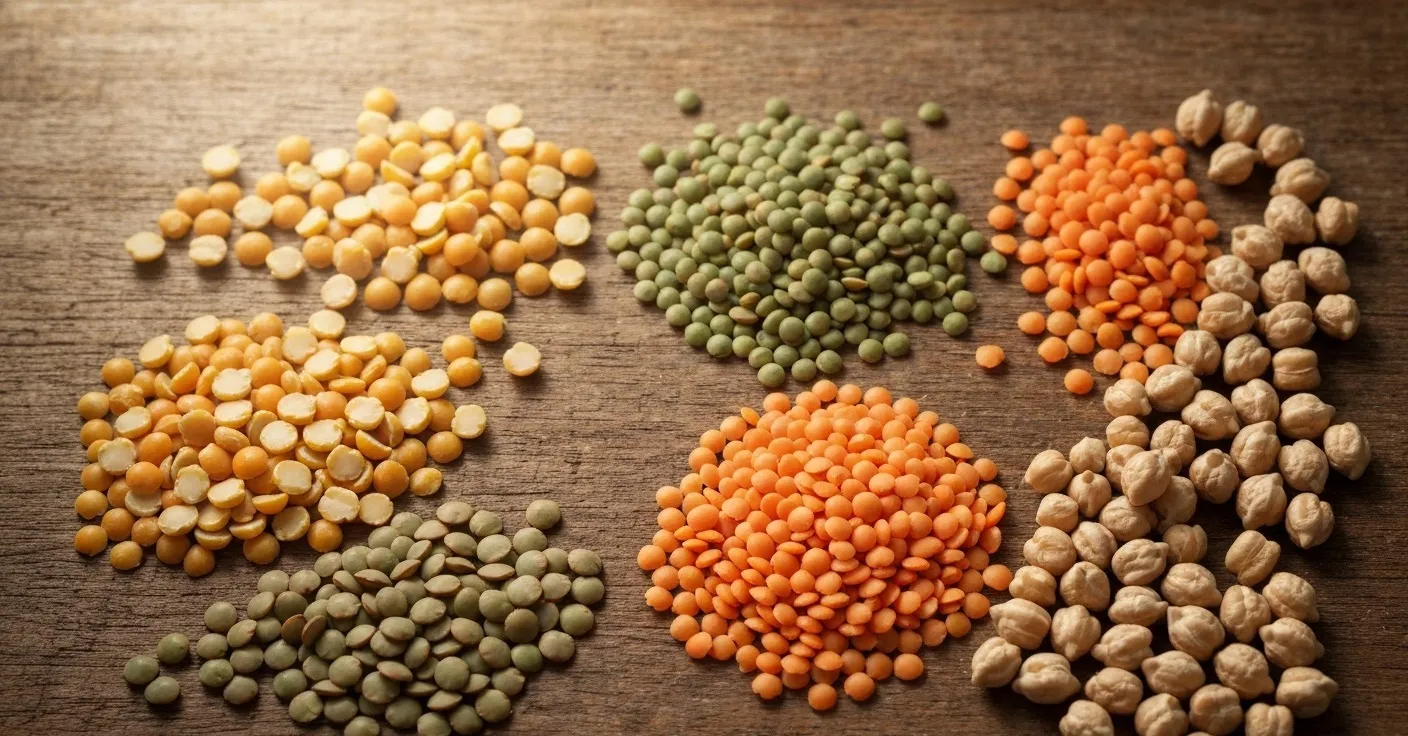
There are practical reasons these ingredients became dominant in grain-free formulation. They’re cheaper sources of plant protein than meat. They allow manufacturers to push the crude protein percentage on the label higher without proportionally increasing meat content — the fragmentation trick discussed in the article on protein for dogs. They have a clean marketing story. And they hold kibble together structurally in the absence of starch from grains.
The same fragmentation phenomenon shows up in cat food, and a similar reading exercise is laid out in reading cat food labels. Once you know to count related ingredients together, ingredient lists tell a different story than the front of the bag.
The biological concern is dose-dependent. A small amount of peas in a meat-heavy formula isn’t the same as a formulation where the top three or four ingredients are pea-based. The implicated diets typically fell in the latter category — the legume load was the dominant nutritional feature, not a minor addition.
Who’s actually at elevated risk
The honest answer is: we don’t fully know. But the signal in the FDA data and in subsequent veterinary case series points toward a few patterns.
Dogs with sustained exposure (over a year, often two or more) to BEG-style diets appear most affected. Breeds with lower endogenous taurine synthesis — Golden Retrievers most prominently, but also some Labradors, Newfoundlands, and Cocker Spaniels — appear overrepresented in the reports. Larger dogs may have more capacity to compensate metabolically than smaller ones, though the data here is mixed. Dogs already carrying genetic DCM risk (Dobermans, Boxers, Great Danes) on these diets may have an additive risk that’s especially worth avoiding.
For most other dogs — small mixed breeds eating a balanced grain-free formula for a few months, dogs rotating through multiple foods, dogs on grain-free formulas that don’t feature pulse legumes as a dominant ingredient class — the absolute risk based on current data appears low. Not zero, but low.
The harder question is whether there’s any upside to grain-free that justifies even a small elevated risk. For most dogs, the answer is no.
The grain allergy myth
The original marketing case for grain-free was that dogs were widely allergic to grains. This claim has aged poorly in the face of actual allergy research.
True food allergies in dogs are uncommon — roughly 10 to 15 percent of all canine allergies are food-related, with the remainder being environmental or flea-related. Within that food-allergy slice, the most common culprits, in order, are beef, dairy, chicken, lamb, egg, soy, and wheat. Note where wheat ranks: seventh, well behind several animal proteins (Olson et al., 2020). Corn, despite a decade of marketing telling owners it was a common trigger, rarely shows up in dermatology studies as a confirmed allergen at all.
The dogs who genuinely benefit from a grain-free diet are a small subset of food-allergic dogs whose specific trigger happens to be a grain. That’s a real population. It’s just much smaller than the boutique pet food market has implied. Most dogs with chronic itching, ear infections, or GI symptoms benefit far more from an elimination trial targeting animal proteins than from removing grains.
A working dog on a high-quality grain-inclusive formula with rice, oats, or barley is not nutritionally disadvantaged. Whole grains contribute fermentable fiber, B vitamins, and a stable carbohydrate source that supports steady energy. The supplementation thinking around active dogs — like the amino acid profile in Petterm Muscle Gain Soft Chews — doesn’t change based on whether the base diet is grain-inclusive or grain-free; what changes is the underlying assumptions about the kibble’s quality and digestibility.
A practical decision tree
If you’re trying to make a real-world choice for your own dog, the framework below tracks what most veterinary cardiologists are saying privately, even where the FDA hasn’t given a public directive.

-
Does your dog have a diagnosed grain allergy confirmed by elimination trial? If yes, grain-free is medically appropriate, but choose a formula where the carbohydrate base isn’t dominated by pulse legumes. Sweet potato, tapioca, or rice-free novel-grain formulations exist.
-
Is your dog a breed predisposed to DCM (Doberman, Boxer, Great Dane, Irish Wolfhound, Newfoundland)? Avoid BEG-style diets. The base risk plus the diet risk is not a stack worth carrying. Stick to formulas with extensive feeding-trial data, ideally from manufacturers participating in WSAVA guidelines.
-
Is your dog a Golden Retriever, Labrador, or Cocker Spaniel? Lean toward grain-inclusive formulas with meat-forward ingredient lists. If your dog has been on a BEG-style diet for over a year, ask your vet about a baseline echocardiogram and a taurine blood level, especially if you’re seeing any reduction in exercise tolerance.
-
Healthy mixed-breed adult on a grain-free formula that isn’t legume-heavy and shows good muscle tone, energy, and coat? Reasonable to continue, with the awareness that the science remains open. Periodic reassessment makes sense.
-
Switching for marketing reasons or “wellness” intuition rather than a diagnosed need? The evidence base for grain-free providing health benefits in dogs without a specific grain allergy is essentially absent. The evidence base for potential harm in a subset is real, if incomplete.
Frequently asked questions
Is my dog at risk if she’s been on grain-free for years and seems fine?
Most dogs on grain-free formulas haven’t developed DCM, and many never will. “Seems fine” is reassuring but not diagnostic. Early DCM is silent. If your dog has been on a BEG-style diet for over two years and is a Golden Retriever, Cocker Spaniel, or other potentially susceptible breed, ask your vet about a screening echocardiogram and a taurine level. For most other healthy adult dogs without symptoms, a thoughtful diet change is reasonable without further workup.
Can I just supplement taurine and stay on the same food?
You can, and some owners do under veterinary guidance, but this misses the point that taurine deficiency is only one of several proposed mechanisms. If the pathway in a given dog isn’t taurine-mediated, supplementation won’t address whatever else is happening. The cleaner intervention for a concerned owner is usually a diet change to a well-studied, grain-inclusive formula from a manufacturer with strong nutritional research credentials.
Are all grain-free foods dangerous?
No. The concern is specifically about formulas heavy in pulse legumes (peas, lentils, chickpeas) and exotic proteins, often from smaller manufacturers without large feeding-trial datasets. Grain-free formulas built primarily on conventional animal proteins with limited legume content carry less of the implicated profile, though the broader question of why grain-free in the first place still applies.
What does “WSAVA-compliant” actually mean?
The World Small Animal Veterinary Association publishes guidelines suggesting that pet food manufacturers should employ board-certified veterinary nutritionists, conduct AAFCO feeding trials rather than only formulation calculations, and publish nutrient content beyond the minimum legal requirements. Manufacturers meeting these criteria are a small subset of the market. The list typically includes companies like Purina, Hill’s, Royal Canin, Iams, and Eukanuba. These aren’t “premium” in marketing terms, but they’re the most heavily researched.
My vet said grain-free is fine. Who’s right?
Veterinary opinion on this isn’t uniform, and individual vets weigh the open questions differently. If your vet has reviewed your dog’s specific breed risk, body condition, and history and concluded the current diet is appropriate, that’s a reasoned clinical judgment. The FDA investigation hasn’t produced a finding strong enough to override individual clinical reasoning, and reasonable veterinarians can disagree.
Does my dog need an echocardiogram?
Probably not, if she’s asymptomatic, on a well-formulated grain-inclusive diet, and not in a high-risk breed group. Routine cardiac screening makes more sense for dogs in predisposed breeds, dogs with several years of BEG-diet exposure, and dogs showing early signs (reduced exercise tolerance, occasional cough, fainting episodes).
Should I be worried about chickpeas or peas in any amount?
No. Small amounts of legumes in a meat-forward formula are not the concern. The implicated diets typically had pulse legumes in multiple forms in the top five ingredients. Reading ingredient lists with the fragmentation issue in mind — counting related ingredients together — is the practical move.
When to contact your veterinarian
Most diet adjustments are reasonable home-managed decisions. The DCM question becomes a medical one in specific situations.
Schedule a non-urgent appointment if your dog has been on a BEG-style diet for more than a year, is a Golden Retriever, Cocker Spaniel, Labrador, or other potentially susceptible breed, and you’d like baseline cardiac screening before changing the diet. A taurine level, NT-proBNP cardiac biomarker, and a basic echocardiogram give you a reference point and let you measure improvement after a diet change.
Call your vet within 24 to 48 hours if your dog has reduced exercise tolerance over weeks to months, occasional coughing especially when lying down, episodes of weakness or faintness, or abdominal distension that wasn’t there before. These can be early signs of cardiac compromise and warrant evaluation rather than a wait-and-see approach. Seek same-day veterinary care if your dog collapses, struggles to breathe at rest, has blue or gray gum coloration, or has a sudden severe drop in energy. Acute heart failure is a medical emergency.
References
-
FDA Center for Veterinary Medicine (2018). “FDA Investigating Potential Connection Between Diet and Cases of Canine Heart Disease.” U.S. Food and Drug Administration, July 12, 2018.
-
FDA Center for Veterinary Medicine (2019). “FDA Investigation into Potential Link between Certain Diets and Canine Dilated Cardiomyopathy.” U.S. Food and Drug Administration, June 27, 2019.
-
FDA Center for Veterinary Medicine (2022). “Questions & Answers: FDA’s Work on Potential Causes of Non-Hereditary DCM in Dogs.” U.S. Food and Drug Administration, December 23, 2022.
-
Freeman, L.M., Stern, J.A., Fries, R., Adin, D.B., Rush, J.E. (2018). “Diet-associated dilated cardiomyopathy in dogs: what do we know?” Journal of the American Veterinary Medical Association, 253(11), 1390–1394.
-
Kaplan, J.L., Stern, J.A., Fascetti, A.J., et al. (2018). “Taurine deficiency and dilated cardiomyopathy in Golden Retrievers fed commercial diets.” PLOS ONE, 13(12), e0209112.
-
Adin, D., DeFrancesco, T.C., Keene, B., et al. (2019). “Echocardiographic phenotype of canine dilated cardiomyopathy differs based on diet type.” Journal of Veterinary Cardiology, 21, 1–9.
-
McCauley, S.R., Clark, S.D., Quest, B.W., Streeter, R.M., Oxford, E.M. (2020). “Review of canine dilated cardiomyopathy in the wake of diet-associated concerns.” Journal of Animal Science, 98(6).
-
Backus, R.C., Ko, K.S., Fascetti, A.J., et al. (2003). “Low plasma taurine concentration in Newfoundland dogs is associated with low plasma methionine and cyst(e)ine concentrations and low taurine synthesis.” Journal of Nutrition, 133(11), 3823–3826.
-
Mansilla, W.D., Marinangeli, C.P.F., Ekenstedt, K.J., et al. (2019). “Special topic: The association between pulse ingredients and canine dilated cardiomyopathy: addressing the knowledge gaps before establishing causation.” Journal of Animal Science, 97(3), 983–997.
-
Sanderson, S.L. (2018). “Taurine and carnitine in canine cardiomyopathy.” Veterinary Clinics of North America: Small Animal Practice, 36(6), 1325–1343.
-
Smith, C.E., Parnell, L.D., Lai, C.Q., Rush, J.E., Freeman, L.M. (2021). “Investigation of diets associated with dilated cardiomyopathy in dogs using foodomics analysis.” Scientific Reports, 11(1), 15881.
-
Olson, K.R., Goldstein, R.E., Mealey, K.L. (2020). “Cutaneous adverse food reactions in dogs: a retrospective analysis of common allergens.” Veterinary Dermatology, 31(5), 363–370.
Researched and reviewed by the Petterm Editorial Team · Last reviewed May 2026
This article is for educational purposes and is not veterinary medical advice. Petterm products are not intended to diagnose, treat, cure, or prevent any disease. Results may vary. Always consult your veterinarian before changing your dog’s diet or introducing a new supplement, especially if your dog has a known heart condition, is in a breed predisposed to dilated cardiomyopathy, or is taking cardiac medication.