


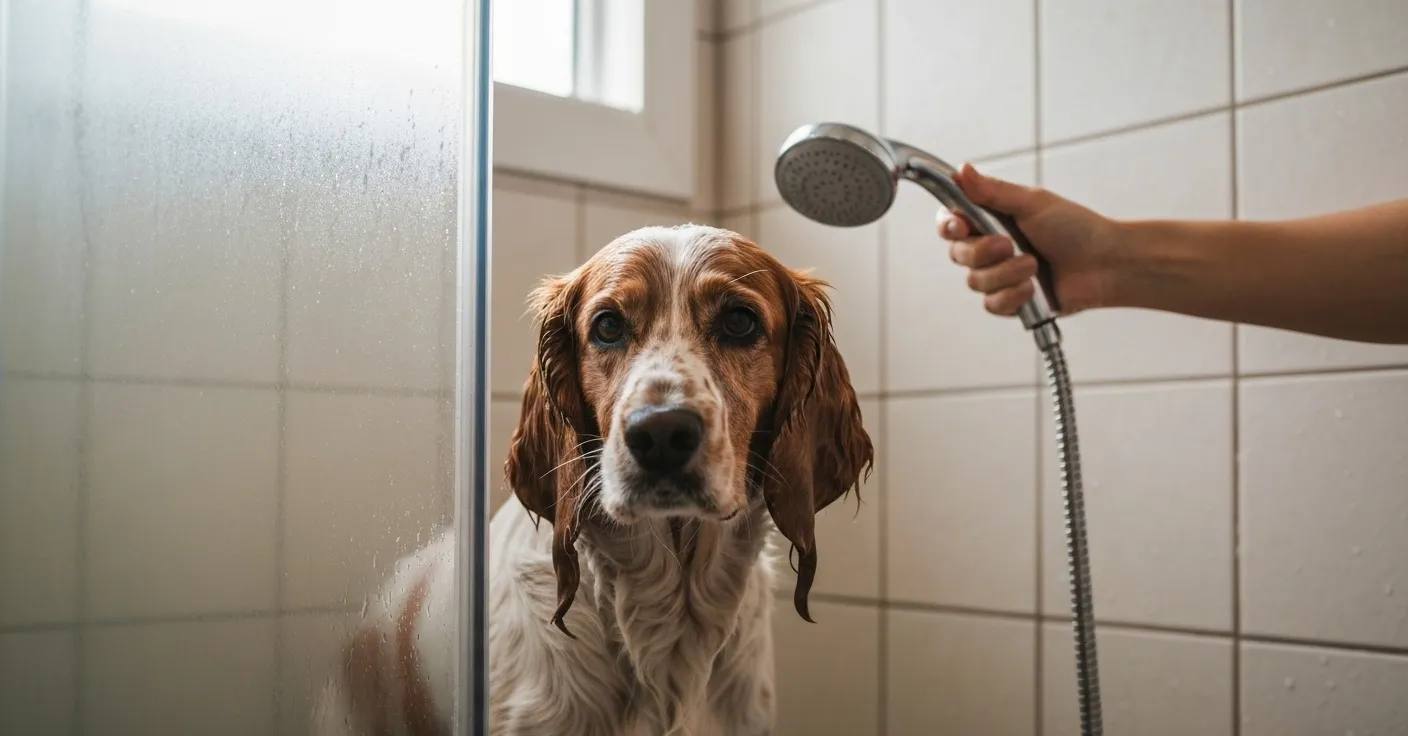
The first dog I ever had to tell an owner to bathe less was a four-year-old Standard Poodle named Etta. She lived in a tidy condo in Portland, and her owner had been giving her a full lather-and-rinse every Saturday for almost two years. Etta arrived at my clinic with flaky shoulders, a dull jacket that should have been glossy, and a faint pink tone along her belly that her owner had assumed was just “her color.” It wasn’t. It was a low-grade barrier-disruption dermatitis caused, almost entirely, by a perfectly nice oatmeal shampoo applied fifty-two times a year.
Her owner was doing what nearly every dog forum tells you to do. She’d read “weekly baths keep your Poodle clean and odor-free,” followed the script, and inadvertently scrubbed her dog’s stratum corneum down to the point where the lipid film couldn’t reassemble between washes. Two weeks of skipping baths plus a switch to a properly pH-balanced wash, and Etta’s coat shifted from frizzy and matte to soft and reflective. Same dog. Same brushing routine. Different bath cadence.
This is one of the most over-prescribed numbers in dog care. There’s no universal answer, and most of the answers floating around the internet are wrong because they assume one coat type, one skin condition, and one lifestyle. Bathing frequency is a clinical decision, not a calendar default.
What’s actually happening to the skin during a bath
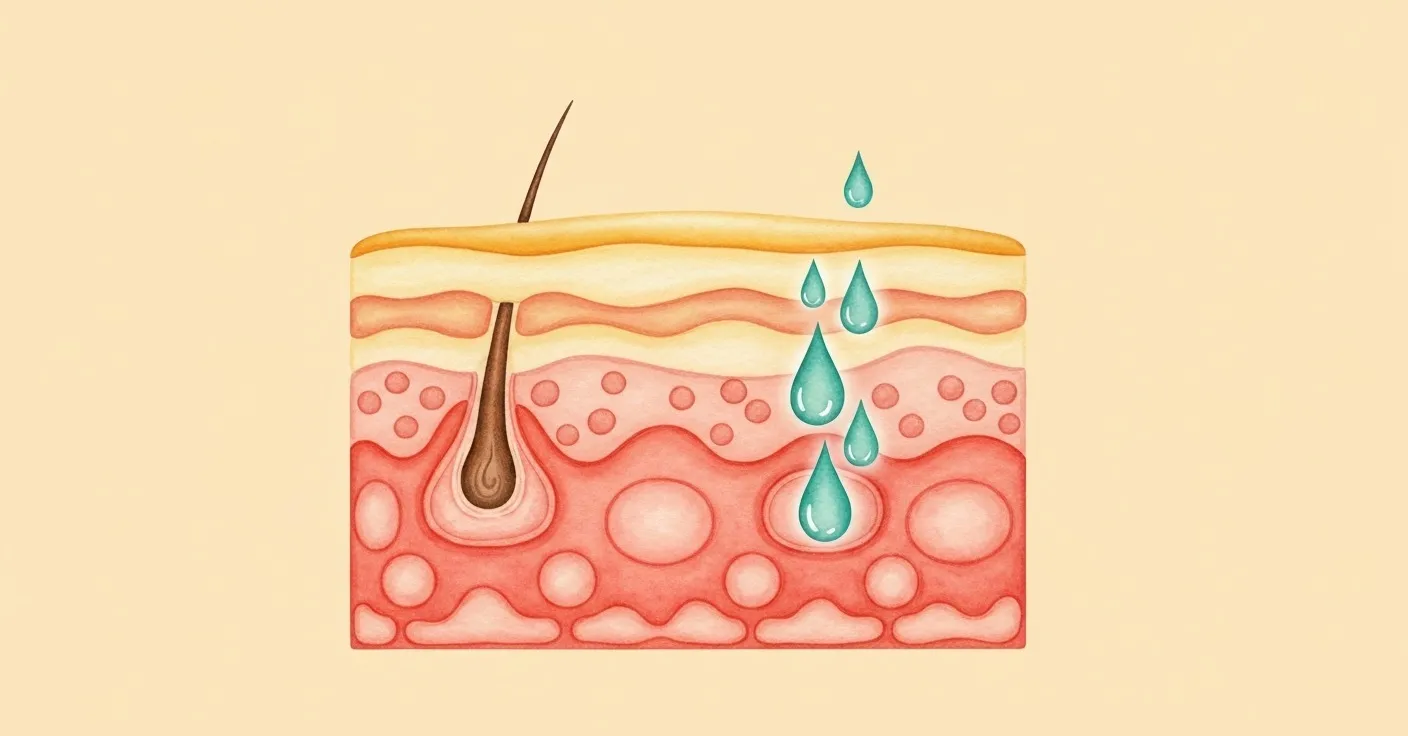
A dog’s skin is structurally similar to ours but thinner, less acidic, and built around a different microbial balance. The outermost layer, the stratum corneum, is a brick-and-mortar arrangement of dead keratinocytes (the bricks) held together by intercellular lipids — ceramides, cholesterol, and free fatty acids (the mortar). On top of that sits a thin film of sebum, produced by sebaceous glands attached to each hair follicle, plus secretions from the apocrine sweat glands that thread through canine skin. Together, that lipid film waterproofs the dog, suppresses transepidermal water loss, and feeds a resident microbiome that competes with opportunistic pathogens (Watson, 1998; Bourdeau, 1991).
Shampoo, by design, strips that film. Surfactants are amphiphilic molecules — one end binds water, the other binds oil — and they emulsify sebum so it rinses away with the dirt it’s holding. That’s the whole point. The problem is that surfactants don’t discriminate between yesterday’s mud and the lipid mortar holding the stratum corneum together. Wash too often, with too aggressive a surfactant, at the wrong pH, and the barrier doesn’t have time to rebuild between baths. You end up with what Etta had: increased transepidermal water loss, microscopic gaps in the corneocyte layer, and an inflammatory cascade that looks like flakiness and irritation on the outside (Loeffler et al., 2011).
The barrier takes roughly 48–72 hours to reassemble its lipid film after a thorough bath in a healthy dog. In a dog with already-compromised skin — atopic, seborrheic, post-clip — that recovery window can stretch to a week or more.
Coat type sets the baseline frequency
Before any modifier, coat type is the first variable. The hair shaft architecture, density, and sebum-distribution efficiency vary enormously across breeds, and they directly determine how often you can reasonably wash without disrupting the system.
Smooth coats (Labrador Retrievers, Boxers, Beagles, Vizslas, Dobermans) carry short, tight hair with a high density of sebaceous glands relative to surface area. Sebum spreads efficiently along the short shaft, so the coat self-cleans quickly. These dogs do well on baths every 6–8 weeks, sometimes less if they live indoor lives with minimal outdoor mess. A weekly bath on a Labrador is almost always overkill and frequently the cause of the “stinky Lab” paradox where more washing leads to more odor.
Double coats (Golden Retrievers, German Shepherds, Huskies, Akitas, Bernese Mountain Dogs) have a dense undercoat plus a longer guard layer. The undercoat traps debris, but it also traps shampoo, which is a real problem. Inadequately rinsed shampoo residue in a double coat is a top-three cause of post-bath dermatitis I see in clinic. These dogs need 4–8 weeks between baths, paired with thorough deshedding and brushing both before and after. Brush first to remove loose undercoat that would otherwise hold soap. Then condition deeply, and rinse for noticeably longer than feels necessary.
Curly coats (Poodles, Bichons, Portuguese Water Dogs, Doodle crosses) are the highest-maintenance category. The hair doesn’t shed normally — it grows continuously and curls back on itself, trapping dirt, dander, and skin oils against the body. Curly-coated dogs typically need baths every 3–4 weeks to prevent matting and skin issues underneath, almost always in conjunction with professional grooming. Etta the Poodle in my opener was a real outlier — her owner was doing weekly because she’d read it on a Doodle forum. For most curly coats, every three to four weeks with proper conditioning is plenty.
Long coats (Yorkshire Terriers, Maltese, Shih Tzus, Lhasa Apsos) have fine, often single-layered hair that tangles easily and shows dirt quickly. These dogs do best on a 4-week rhythm, often weekly face washes between full baths if there’s tear staining or food debris around the muzzle. There’s significant overlap here with the tear-stain conversation I cover in detail in tear stain causes and solutions.
Wire coats (Schnauzers, most Terriers, Wirehaired Pointers) have a coarse, water-resistant outer layer that’s almost self-cleaning. These dogs usually need full baths only every 6 weeks, and even less if the coat is being hand-stripped rather than clipped — frequent washing softens the wire texture in ways that working-line breeders specifically try to avoid.

Skin status changes the math entirely
A dog’s clinical skin status is a more powerful modifier than coat type. A healthy Labrador and an atopic Labrador are not on the same schedule even though they wear the same coat.
Healthy skin is the baseline above. No flakiness, no redness, normal sebum production, intact lipid film. Default to the coat-type frequency.
Atopic dermatitis — the chronic allergic skin disease that affects roughly 10–15% of dogs — flips the script. Counterintuitively, atopic dogs often benefit from more frequent baths, not fewer, because regular bathing physically removes the airborne and contact allergens (pollens, dust mite proteins, mold spores) that are driving the immune cascade. The ICADA international consensus guidelines for canine atopic dermatitis specifically recommend twice-weekly bathing with a barrier-supporting shampoo during active flare periods (Olivry et al., 2010; Marsella & White, 2011). The shampoo choice has to compensate — ceramide-replenishing or oat-based formulas that don’t strip what’s already a fragile barrier.
Seborrheic skin — either greasy (oleosa) or dry/flaky (sicca) — needs medicated bathing on a defined protocol, typically once or twice weekly during active disease, then tapered. Sulfur, salicylic acid, or selenium sulfide shampoos are common (DeBoer, 1995). Bath frequency here is driven by the protocol, not the calendar.
Post-surgical dogs generally shouldn’t be bathed for 10–14 days after a procedure, depending on incision location and closure method. Your surgeon’s discharge instructions override any general rule.
Flea infestation changes things acutely. A medicated flea bath is part of the immediate treatment, but most flea bath products are too harsh for repeat use beyond the initial knockdown. Long-term flea control is pharmaceutical, not bath-based.
Shampoo selection matters more than frequency
Picking the wrong shampoo and bathing infrequently is still worse than picking the right shampoo and bathing more often. The single most important number on the bottle is pH.
Canine skin pH sits in a window roughly between 6.5 and 7.5, which is meaningfully more neutral than human skin (Hill et al., 2006; Matousek & Campbell, 2002). Human skin runs acidic, around 5.5, and human shampoos are formulated for that environment. Including baby shampoo. Especially baby shampoo, which is built around tear-free surfactants that are pH-balanced to the human eye — not to canine skin chemistry. Using human shampoo on a dog isn’t disastrous in a one-time pinch, but as a routine choice it actively works against the barrier you’re trying to protect.
A few specifications to look for on a canine shampoo label:
- pH stated on the bottle (or readily available from the manufacturer). 6.5–7.5 is the target range. Many “gentle” or “natural” shampoos don’t disclose pH, which is itself a warning sign.
- Sulfate type, if present. Sodium laureth sulfate (SLES) is milder than sodium lauryl sulfate (SLS). Cocamidopropyl betaine is a milder amphoteric surfactant often used in sensitive-skin formulas.
- Ceramide or fatty acid inclusion for atopic-prone dogs. These support barrier reassembly between baths.
- No artificial fragrance for any dog with a history of skin reactions. The fragrance question is the most common hidden allergen in over-the-counter dog shampoos.
For medicated baths — chlorhexidine for bacterial overgrowth, miconazole or ketoconazole for yeast, oatmeal or pramoxine for itch — contact time is the variable most owners underestimate. Chlorhexidine 2–4% needs 10 minutes of contact on a wet, lathered coat before rinsing. Miconazole the same. Oatmeal soaks need at least 5 minutes. If the protocol says “lather, wait, rinse,” you have to actually wait. A 30-second medicated bath delivers almost none of the active ingredient’s benefit (Marsh, 2017).
A practical workflow that doesn’t shred the barrier
For most healthy dogs at their coat-type frequency, the practical sequence that protects the barrier is:
- Brush thoroughly before the bath to remove loose hair, mats, and surface debris. Wet mats become harder to remove, not easier.
- Pre-rinse with warm water (not hot — warm enough that you’d be comfortable washing your own face in it) for longer than feels necessary. A solid 60–90 seconds of pre-rinse removes a surprising amount of surface dirt before any shampoo touches the dog.
- Dilute the shampoo in a separate cup with warm water at roughly 1:3 or 1:5. Diluted shampoo spreads more evenly, requires less surfactant per square inch of skin, and rinses out faster.
- Lather methodically from the neck back, avoiding the face. Eyes and ears get a damp washcloth, never direct lather.
- Allow contact time if the product specifies it. For non-medicated shampoos, 2–3 minutes is plenty.
- Rinse longer than you think you need to. This is where 80% of post-bath skin issues come from. Keep rinsing until the water running off is completely clear and the coat squeaks slightly under your fingers.
- Condition if appropriate, especially for long or curly coats, and rinse again.
- Dry thoroughly. Damp skin under a double coat is a yeast greenhouse.
Between full baths, rinse-only sessions with plain warm water handle the muddy-walk problem without any shampoo at all. A rinse and towel dry doesn’t disrupt the lipid film. Use it freely.
While bathing supports the coat from the outside, skin and coat condition is genuinely a whole-body project, and the nutritional side matters. The amino acids and zinc in Petterm Muscle Gain Soft Chews are intended as daily support for the structural proteins that build healthy skin and hair shafts from the inside out — keratin doesn’t assemble itself, and a dog whose total amino acid intake is marginal will often show it first in coat quality.

Puppies, seniors, and the lifecycle question
Puppies under 8 weeks generally don’t need full baths at all — a damp washcloth handles most situations, and their thermoregulation isn’t reliable enough for full immersion bathing yet. After 8 weeks, the coat-type rules apply, with the addition that puppy skin is more sensitive to surfactant concentration. Dilute more aggressively, and use products specifically formulated for puppies if available.
Senior dogs sit on the other end. Aging skin produces less sebum, thins out, and reassembles its barrier more slowly (Reinero, 2019). Most seniors do better on the longer end of their coat-type window — a 12-year-old Lab who used to get bathed every 6 weeks may need to shift to every 8–10 weeks, with extra attention to conditioner. Senior arthritis is also worth planning around: a non-slip bath mat, a handheld sprayer, and a willingness to break the bath into two shorter sessions can be the difference between a sustainable routine and a fight that becomes a once-a-year traumatic event for both of you.
Reading the signals: too much vs. too little
The dog tells you. You just have to look at the right places.
Signs of over-bathing:
- Fine flakes scattered along the topline and behind the ears within 24–48 hours of a bath
- Coat that looks dull or matte rather than reflective, especially under good natural light
- Post-bath itching that didn’t exist before the bath (the barrier-disruption signal)
- Pinkish belly skin or a faint inflamed cast across the inner thighs
- Subtle eye irritation or increased eye discharge that tracks with bath days, which can overlap with the patterns described in dog eye discharge types
Signs of under-bathing:
- A genuine doggy odor that doesn’t dissipate after a brushing
- A greasy or sticky feel to the coat at the base of the shoulder blades or along the tail base
- Visible debris accumulation in a long or curly coat
- Recurring superficial skin infections — small pustules, hot spots in moist areas, malodorous ears that recur shortly after cleaning
The art is calibrating between these two failure modes. Most owners I see in clinic are erring on the over-bathing side, not the under-bathing side, especially in apartment-dwelling dogs whose lives are already pretty clean.
Frequently asked questions
Can I just use my own shampoo if I’m out of dog shampoo?
For a single emergency bath, a small amount of fragrance-free, sulfate-mild human shampoo is unlikely to cause harm. As a routine substitute, no — the pH mismatch builds barrier disruption over weeks of repeated use. Keep a backup bottle of dog shampoo so this never has to be a question.
What about waterless or dry shampoos?
Useful for spot cleaning, not a replacement for actual baths. Most dry shampoos work by adsorbing oil onto a powder carrier (often cornstarch-based), which is fine occasionally. Overuse can leave residue trapped in the coat that itself becomes irritating. Treat them as a bridge product rather than a primary tool.
Why does my dog smell worse a day after a bath?
Two possibilities. Either you’re bathing too frequently and the rebound sebum production is overshooting baseline, or you didn’t rinse fully and residual shampoo is interacting with skin bacteria. Stretch the interval and rinse longer next time.
Is a professional groomer worth it for a Labrador?
Usually not, from a pure hygiene standpoint. Smooth coats are genuinely manageable at home. Where groomers earn their fee is on double, curly, long, and wire coats where coat handling skills meaningfully change the outcome.
Does swimming count as a bath?
It counts as a rinse, sometimes a chemical insult depending on the water source. Pool chlorine, lake algae, and saltwater all leave residue on coat and skin. After any swim, a thorough plain-water rinse and a good towel-dry is the minimum. Frequent swimmers benefit from a barrier-supporting conditioner used as a leave-in spray.
How do I bathe a dog who hates baths?
Slow desensitization, high-value treats during every stage, and breaking the experience into shorter sessions over days. Bath aversion is a behavior project as much as a grooming one. Forcing a fearful dog through a weekly bath is a recipe for cumulative behavioral damage; reducing frequency to the minimum the coat actually needs is often part of the answer.
Should I bathe a dog with itchy skin more or less often?
It depends entirely on the cause of the itch. Atopic dogs often benefit from more frequent baths with a barrier-supporting shampoo. Dogs whose itch is being driven by shampoo sensitivity itself benefit from fewer baths and a product switch. This is exactly the situation where guessing at home is unproductive and a dermatology workup is worth the visit.
When to contact your veterinarian
A bathing routine is a reasonable home-managed decision for most healthy dogs. It becomes a clinical question when the skin stops behaving normally between baths or when home adjustments aren’t resolving a clear issue.
Watch and adjust at home if: your dog has a healthy coat, no visible skin irritation, and you’re fine-tuning frequency or product selection based on activity level, season, or coat changes. Try a single variable change (frequency or shampoo, not both at once) and reassess after two or three bath cycles before changing anything else. Most owners can self-correct an over-bathing problem within two months once they recognize the pattern.
Schedule a veterinary visit if: your dog has recurring skin infections (multiple courses of antibiotics or antifungals in a year), persistent itching that doesn’t respond to bath-protocol changes, flaky or greasy skin that doesn’t resolve with shampoo adjustment, hair loss in defined patterns, or any post-bath reaction that lasts more than 48 hours. These patterns usually indicate underlying allergic, endocrine, or infectious disease — not a bathing problem — and a dermatology referral is often where progress actually happens. A board-certified veterinary dermatologist can run allergy panels, cytology, and skin biopsies that a bathing protocol simply can’t substitute for (Curtis et al., 2010; Mueller et al., 2012).
References
-
Watson, T.D.G. (1998). “Diet and skin disease in dogs and cats.” Journal of Nutrition, 128(12), 2783S–2789S.
-
Bourdeau, P. (1991). “Anatomie et physiologie de la peau du chien.” Pratique Médicale et Chirurgicale de l’Animal de Compagnie, 26(4), 489–498.
-
Loeffler, A., et al. (2011). “Skin barrier function and atopic dermatitis in dogs: an updated review.” Veterinary Dermatology, 22(3), 239–248.
-
Olivry, T., et al. (2010). “Treatment of canine atopic dermatitis: 2010 clinical practice guidelines from the International Task Force on Canine Atopic Dermatitis.” Veterinary Dermatology, 21(3), 233–248.
-
Marsella, R., & White, S.D. (2011). “Canine atopic dermatitis: a review of the recent advances.” Veterinary Dermatology, 22(3), 263–275.
-
DeBoer, D.J. (1995). “Canine primary seborrhea: a clinical perspective.” Veterinary Clinics of North America: Small Animal Practice, 25(4), 853–869.
-
Hill, P.B., et al. (2006). “The pH of canine skin: variation with site and breed.” Veterinary Dermatology, 17(2), 145–152.
-
Mueller, R.S., et al. (2012). “A review of topical therapy for skin infections with bacteria and yeast.” Veterinary Dermatology, 23(4), 330–341.
-
Marsh, K.A. (2017). “Shampoo formulation and contact time: practical considerations in veterinary dermatology.” Compendium on Continuing Education for the Practicing Veterinarian, 39(2), 88–94.
-
Matousek, J.L., & Campbell, K.L. (2002). “A comparative review of cutaneous pH.” Veterinary Dermatology, 13(6), 293–300.
-
Reinero, C.R. (2019). “Cutaneous barrier dysfunction in canine atopic dermatitis and beyond.” Veterinary Journal, 248, 16–22.
-
Curtis, C.F., et al. (2010). “Evidence-based veterinary dermatology: a systematic review of interventions for treatment of Pseudomonas otitis in dogs.” Veterinary Dermatology, 21(6), 619–627.
Researched and reviewed by the Petterm Editorial Team · Last reviewed May 2026
This article is for educational purposes and is not veterinary medical advice. Petterm products are not intended to diagnose, treat, cure, or prevent any disease. Results may vary. Always consult your veterinarian before changing the bathing routine of a dog with active skin disease, recent surgery, or a chronic dermatologic condition.