



A few summers ago a friend brought her senior Border Collie to see me. The dog was eleven, still working sheep on the weekends, and starting to slow down in the hips. She’d been giving him a flaxseed-oil capsule each morning for two years, on the recommendation of a holistic-leaning website. “It’s all omega-3, right?” she asked. “So it should be helping his joints.”
That was the conversation that taught me how confusing the omega-3 category is for pet parents. Flaxseed oil does contain an omega-3 fatty acid. But it’s not the one her dog needed, and the difference isn’t a minor footnote. It’s the whole story.
This article is about the part of the omega-3 picture that pet food labels gloss over: which form of omega-3 a dog can actually use, how source affects what gets absorbed, and where the evidence sits for the benefits people most often hope for.
The Three Omega-3s, and Why They Are Not Interchangeable
Omega-3 is a family of polyunsaturated fatty acids, not a single nutrient. Three forms matter for dogs.
Alpha-linolenic acid (ALA) is the plant-derived form. It’s the omega-3 in flaxseed, chia, hemp, and walnut oils. Plants make it; mammals can’t synthesize it from scratch, so it’s nutritionally essential.
Eicosapentaenoic acid (EPA) is one of the two long-chain marine omega-3s. It’s the form most directly involved in dampening inflammation through the body’s eicosanoid pathway. Fish, krill, and certain algae produce it.
Docosahexaenoic acid (DHA) is the other long-chain marine omega-3. It’s the structural fat that makes up much of the brain, retina, and nervous-system tissue. Like EPA, it comes from marine sources.
The functional difference matters because the work omega-3 supplements are usually bought to do — joint comfort, skin and coat support, cognitive maintenance — is work done by EPA and DHA, not ALA. ALA is a precursor. The body has to convert it into EPA and then into DHA through a series of enzymatic steps before it can act in the tissues where most of the benefit shows up.
That conversion is where the dog story diverges sharply from the marketing.
The Conversion Problem in Dogs
In humans, conversion of ALA to EPA is poor — published estimates land between 5% and 10% in healthy adults, and conversion to DHA is even lower, often well under 1% (Bauer, 2008). The enzymes involved are saturable, competitively inhibited by omega-6 intake, and rate-limited by delta-6-desaturase activity.
Dogs do better than cats — cats are nearly unable to convert ALA to EPA at all because of limited desaturase activity — but they don’t do well. Published feeding studies in dogs show that supplementing with ALA-rich plant oils produces modest increases in plasma EPA and minimal increases in DHA, especially compared to direct feeding of EPA and DHA from marine sources (Bauer, 2011).
The practical implication is straightforward: feeding a dog flaxseed oil and expecting it to deliver the joint and skin benefits associated with fish oil is biologically optimistic. A small fraction of the ALA may become EPA over time. Almost none will become DHA. If the goal is the long-chain omega-3 effects, the source needs to be a long-chain omega-3.
This is one of those moments where the label and the biology disagree. A “Rich in Omega-3!” claim on a kibble bag that lists flaxseed as the source is technically accurate. It’s also functionally close to meaningless for the benefits most owners are pursuing.
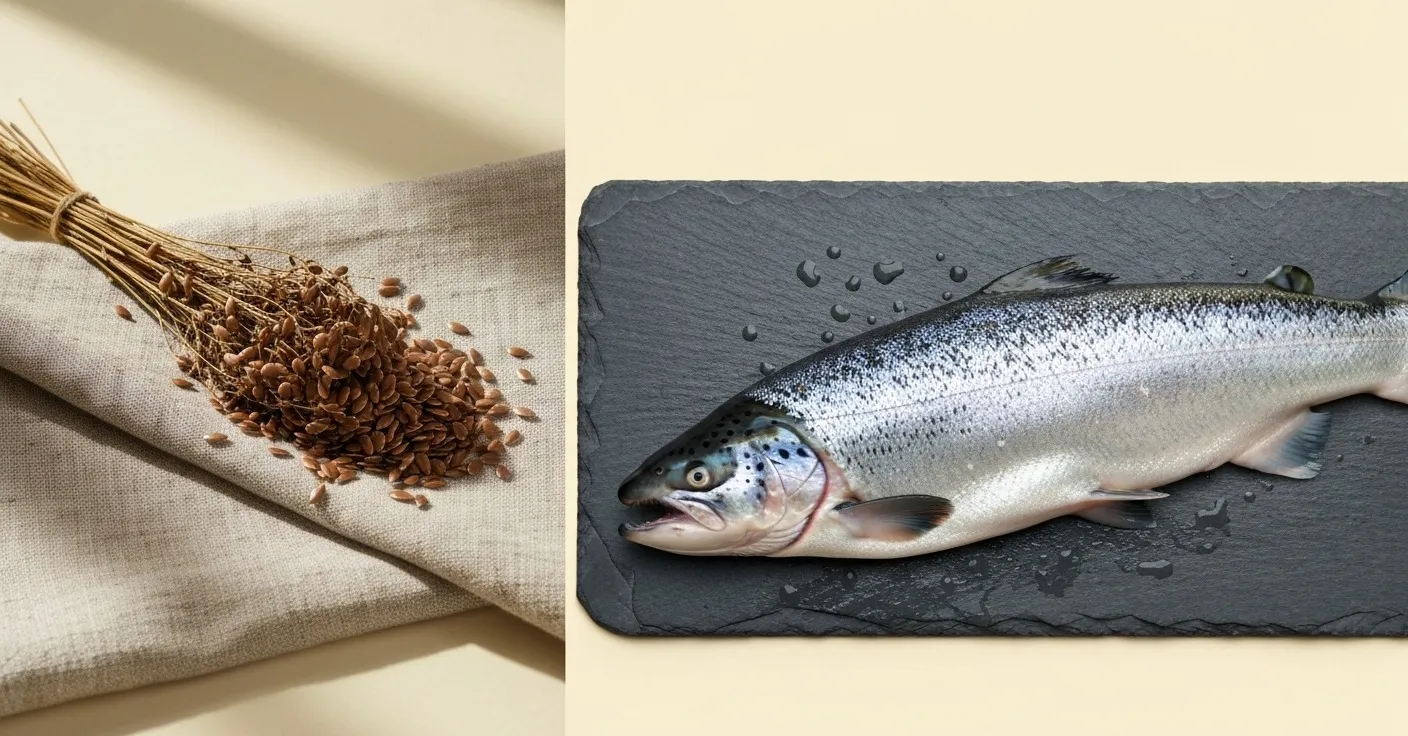
Fish, Krill, and Algae: How Marine Sources Compare
Once we narrow the conversation to EPA and DHA, three source categories cover most of the market.
Fish oil
Standard fish-oil supplements come from sardines, anchovies, mackerel, or salmon. EPA and DHA are present as triglyceride or ethyl-ester forms depending on the processing. Triglyceride forms (often labeled “rTG” — re-esterified triglyceride) absorb better than ethyl-ester forms in head-to-head studies, though both raise plasma EPA and DHA effectively with consistent dosing (Bauer, 2011).
Quality varies more than the bottle suggests. Cheaper fish oils can have lower actual EPA+DHA content than the label implies, and they’re prone to oxidation if stored poorly or processed without protection from heat and light. We’ll come back to oxidation in a moment because it matters more than most owners realize.
Krill oil
Krill oil delivers EPA and DHA bound primarily to phospholipids rather than triglycerides. The phospholipid form is more readily incorporated into cell membranes and shows higher bioavailability in humans, with one study finding roughly a 50% greater rise in the omega-3 index from krill oil compared to a matched dose of fish oil over the same period (Ramprasath et al., 2013).
Dog-specific bioavailability comparisons are less common, but the membrane-incorporation advantage is mechanistic and isn’t species-specific. Krill oil also contains astaxanthin, a carotenoid antioxidant that helps protect the EPA and DHA from oxidative damage in the bottle and in the gut. The downside is cost. Krill oil typically runs two to four times the price of comparable fish oil on an EPA+DHA basis.
Algal oil
Microalgae are where fish get their omega-3s in the first place. Cultivated algal oil — usually from Schizochytrium or similar species — provides DHA, and increasingly EPA, without the rancidity concerns of marine-derived oils and without the heavy-metal contamination risks at the source.
For dogs that don’t tolerate fish flavor, or for households that prefer a non-marine source for sustainability reasons, algal oil is a legitimate option. The catch: most algal supplements are DHA-dominant and EPA-light. If the target use case is joint inflammation, an EPA-rich source like fish oil may give more bang per dose.
What the Evidence Actually Supports
Here’s where I try to separate what’s reasonably established from what’s overclaimed.
Joint comfort in osteoarthritic dogs
The strongest evidence for omega-3 supplementation in dogs is in canine osteoarthritis. A multicenter randomized trial by Roush et al. (2010) tested a diet enriched with high-EPA fish oil in 127 client-owned dogs with confirmed osteoarthritis. Owners reported improved lameness scores and the dogs showed measurable improvements in gait analysis compared to the control diet, all within 90 days. Other studies in the same arena have shown similar trends with appropriately dosed fish oil — the comfort effect appears real, dose-dependent, and clinically meaningful.
This is the use case where the evidence is strongest. It’s also why so many veterinary nutritionists recommend EPA-rich fish oil as a first-line adjunct for older dogs starting to show joint stiffness.
Skin and coat conditions
For atopic dermatitis and chronic non-specific itchiness, omega-3 supplementation has been studied for decades. Mueller et al. (2004) and others have shown that fish-oil supplementation may help reduce pruritus scores in some dogs with atopic dermatitis, though the effect size is modest and inconsistent across dogs.
The honest framing here is: it often helps, sometimes meaningfully, but it’s not a substitute for addressing underlying allergens. Owners who report coat-shine improvements within four to eight weeks of starting marine omega-3s are observing a real and measurable effect — the lipid composition of skin and coat does respond to dietary omega-3 enrichment.
Cognitive support in senior dogs
Pan et al. (2010) found that a nutrient blend including DHA, antioxidants, and mitochondrial cofactors improved cognitive performance in aged dogs on standardized testing. Isolating DHA’s specific contribution from the rest of that blend is methodologically tricky, but DHA’s role in maintaining neuronal membrane function gives the result mechanistic credibility.
Renal and cardiovascular support
Hall et al. (2010) and follow-up work have shown EPA and DHA support in dogs with chronic kidney disease, primarily through anti-inflammatory effects on the kidney microenvironment. The American College of Veterinary Internal Medicine now recommends EPA/DHA inclusion as part of standard management for stage 2+ chronic kidney disease in dogs.
What this doesn’t mean: marine omega-3 is not a treatment for any of the conditions above. It’s a dietary input that has been shown to support comfort and function in dogs with these conditions, often as part of a broader plan. The compliance language matters because the science is honest — these are nutrients, not therapeutics.

Rancidity and Quality: The Issue Nobody Talks About
EPA and DHA are highly unsaturated, which is precisely what makes them biologically active and precisely what makes them prone to oxidation. Oxidized omega-3 doesn’t just lose its benefit — it can actively contribute to oxidative stress and inflammation, which is the opposite of why anyone supplements in the first place (Lenox & Bauer, 2013).
The oxidation problem starts at the manufacturer and continues all the way to the dosing spoon. Common contributors:
- Heat during processing. Cheap rendering of fish oil can degrade the long-chain omega-3s before the bottle ever ships.
- Light and air exposure. Clear bottles, loose caps, and slow-emptying containers all promote oxidation over the course of use.
- Absent antioxidants. Good fish-oil formulations include vitamin E (tocopherol) as a stabilizer. Krill oil contains its own astaxanthin. Algal oil is often packaged with added antioxidants. Cheap fish oils may lack stabilization entirely.
- Storage. Most fish oils should be refrigerated after opening, or used within a few months.
The simplest practical screen: open the bottle and smell it. Fresh fish oil has a mild, marine scent. Rancid fish oil smells sharp, fishy in a metallic way, or unmistakably bad. If a supplement smells off, it’s not worth feeding — and the dog probably won’t want it anyway.
If you’re using a soft-chew product where the oil is encapsulated in a chewable matrix, the manufacturer’s freshness handling and antioxidant inclusion matter even more, because you can’t smell-test individual chews. Look for products that list specific EPA and DHA amounts per chew, declare antioxidant inclusion, and have transparent batch dating.
How Much, and How to Choose
The National Research Council provides safe-upper-limit guidance for combined EPA and DHA intake in dogs, but practical therapeutic dosing for joint comfort runs higher than maintenance intake. Bauer (2011) summarized common clinical doses around 50–100 mg combined EPA+DHA per kilogram of body weight per day for inflammatory and arthritic indications, taken with food.
For a healthy adult dog on a complete commercial diet, the picture is different. If the food already lists EPA and DHA on the label with declared amounts, adding more isn’t necessarily helpful, and at high doses can contribute to bleeding time changes and gastrointestinal upset (Lenox & Bauer, 2013). Always check the existing diet before stacking supplements.
Practical questions worth asking when choosing a product:
- Does the label declare EPA and DHA separately, in milligrams per serving? “Omega-3” alone, without breakdown, usually means the manufacturer is counting ALA in the total.
- What’s the source? Fish (which species), krill, or algae — each has tradeoffs we’ve covered above.
- Are antioxidants included? Vitamin E or rosemary extract for fish oil, astaxanthin for krill, mixed tocopherols for algae.
- How is it stored? Dark bottle or sealed soft chew is good; clear plastic with weak caps is a red flag.
- Does it pair sensibly with the dog’s current diet? Omega-3 absorbs better with fat-containing meals. A soft chew that includes oils in the chew matrix solves both delivery and timing.
For working and senior dogs in particular, supporting joint comfort and muscle maintenance often goes hand in hand. Marine omega-3 is one input. Adequate protein, appropriate exercise, and targeted supplementation for muscle preservation are others. Some owners pursuing comprehensive support pair fish-oil intake with broader muscle-and-joint formulas — the Petterm Muscle Gain Soft Chews is one example of a daily soft-chew approach to that combined picture, used alongside whole-diet considerations rather than as a stand-alone fix.
For owners thinking about overall body composition and energy in senior dogs, our guide on helping underweight dogs gain muscle covers the protein and exercise side of that picture. And for the cluster of tear, eye, and inflammation issues that often appear together in older dogs, tear stain causes and solutions covers some of the adjacent supplementation considerations.
Frequently Asked Questions
Is flaxseed oil completely useless for my dog? Not useless — it provides ALA, which is essential, and contributes to overall fat balance. It just won’t deliver the EPA and DHA benefits that owners typically hope for. If a dog is on flaxseed oil and doing well, there’s no harm. If the goal is joint or skin support, marine omega-3 is the better-targeted choice.
Can I just give my dog the same fish oil softgel I take? Yes, with attention to dose. Human softgels typically contain around 300–500 mg combined EPA+DHA per capsule. That’s a reasonable building block, but the per-kilogram math matters — a large dog may need multiple capsules to reach therapeutic levels for joint support, and a small dog may exceed appropriate intake quickly. Calculate based on body weight and check with a veterinarian if the dog has other health conditions.
My dog has loose stool after starting fish oil. What’s happening? GI upset is the most common side effect of marine omega-3 supplementation, especially when started at full dose. Reducing the amount and ramping up slowly over a couple of weeks usually solves it. Giving the oil with food also helps. If loose stool persists past two weeks, the product, the dose, or both may not be suitable.
Do I need to refrigerate fish oil? Refrigeration extends shelf life by slowing oxidation. Most manufacturers recommend refrigeration after opening for liquid fish oils. Sealed soft chews and capsules are more stable but still benefit from cool, dark storage rather than a sunny countertop.
Is krill oil really worth the cost? For dogs that struggle with fish-oil tolerance or where higher membrane incorporation is the goal, krill oil makes a case for itself. For routine maintenance in a healthy dog, a quality fish oil usually delivers comparable benefit per dollar. The decision depends on tolerance, source preferences, and budget.
How long until I see a difference? Coat improvements often appear within four to eight weeks. Joint comfort changes from marine omega-3 typically take 60–90 days to become consistently noticeable, based on the Roush et al. (2010) timeline. Anyone expecting a same-week change should reset that expectation.
Can omega-3 cause problems with surgery or medications? At very high doses, EPA and DHA may modestly prolong bleeding time. Most veterinarians recommend pausing supplementation a week before elective surgery as a precaution. Discuss any supplement use with your veterinarian before procedures or when starting a new medication.
When to Contact Your Veterinarian
Omega-3 is a dietary ingredient, not a treatment for diagnosed conditions. Contact your veterinarian if your dog shows any of the following:
- Persistent loose stool or vomiting after starting any new supplement
- Increasing joint stiffness or reluctance to move that doesn’t improve with supportive care
- Skin lesions, hair loss, or sores that worsen rather than improve
- Unusual bruising, prolonged bleeding from minor cuts, or visible lethargy
- Any signs of pancreatitis (abdominal pain, vomiting, loss of appetite) — high-fat supplementation is a known consideration in dogs with a history of pancreatitis
These warrant veterinary evaluation. No supplement substitutes for diagnosis and appropriate care.
References
- Bauer, J. E. (2008). Essential fatty acid metabolism in dogs and cats. American Journal of Veterinary Research, 69(11), 1428–1433.
- Bauer, J. E. (2011). Therapeutic use of fish oils in companion animals. Journal of the American Veterinary Medical Association, 239(11), 1441–1451.
- Bauer, J. E. (2016). The essential nature of dietary omega-3 fatty acids in dogs. Journal of the American Veterinary Medical Association, 249(11), 1267–1272.
- Hall, J. A., Brockman, J. A., Davidson, S. J., & Jewell, D. E. (2010). Effects of dietary n-3 polyunsaturated fatty acids on inflammation and disease progression in dogs with naturally occurring chronic renal disease. Journal of Veterinary Internal Medicine, 24(2), 235–243.
- Heinemann, K. M., Waldron, M. K., Bigley, K. E., Lees, G. E., & Bauer, J. E. (2005). Long-chain (n-3) polyunsaturated fatty acids are more efficient than α-linolenic acid in improving electroretinogram responses of puppies. Journal of Nutrition, 135(8), 1960–1966.
- Lenox, C. E., & Bauer, J. E. (2013). Potential adverse effects of omega-3 fatty acids in dogs and cats. Journal of Veterinary Internal Medicine, 27(2), 217–226.
- Mueller, R. S., Fieseler, K. V., Fettman, M. J., et al. (2004). Effect of omega-3 fatty acids on canine atopic dermatitis. Journal of Small Animal Practice, 45(6), 293–297.
- National Research Council. (2006). Nutrient Requirements of Dogs and Cats. National Academies Press.
- Pan, Y., Larson, B., Araujo, J. A., et al. (2010). Dietary supplementation with medium-chain TAG has long-lasting cognition-enhancing effects in aged dogs. British Journal of Nutrition, 103(12), 1746–1754.
- Ramprasath, V. R., Eyal, I., Zchut, S., & Jones, P. J. (2013). Enhanced increase of omega-3 index in healthy individuals with response to 4-week n-3 fatty acid supplementation from krill oil versus fish oil. Lipids in Health and Disease, 12, 178.
- Roush, J. K., Cross, A. R., Renberg, W. C., et al. (2010). Multicenter practice assessment of the effects of omega-3 fatty acids on osteoarthritis in dogs. Journal of the American Veterinary Medical Association, 236(1), 59–66.
Researched and reviewed by the Petterm Editorial Team. Last updated June 2026.
Disclaimer: This article is for informational purposes only and does not constitute veterinary advice. Always consult a licensed veterinarian before starting your dog on any supplement, especially if your dog has a diagnosed health condition, takes other medications, or is preparing for surgery. Individual results vary, and no supplement can prevent or treat disease.