


A client of mine, a calm woman with a four-year-old beagle named Otis, came in last spring frustrated about a problem she didn’t have language for. Otis had started a new probiotic powder two weeks earlier on the recommendation of a friend. The stool quality, she said, was actually fine. The issue was the gas. She described it in the polite, slightly embarrassed way owners use when the symptom is socially awkward but not medically alarming. Otis was clearing rooms. We looked at the label together. The product contained two probiotic strains and a generous dose of inulin from chicory root. I asked her how much she’d been giving and how quickly she’d ramped up. She’d given the full label dose on day one. There’s the answer, I told her. Cut the dose by two-thirds, work back up over three weeks, and see what happens. Three weeks later the gas had quieted to normal.
That conversation comes up more often than you’d think, and it captures something important about inulin: a useful ingredient with a real evidence base behind it, and a fermentation profile that can be brisk enough to cause trouble if it’s introduced carelessly.
What inulin actually is
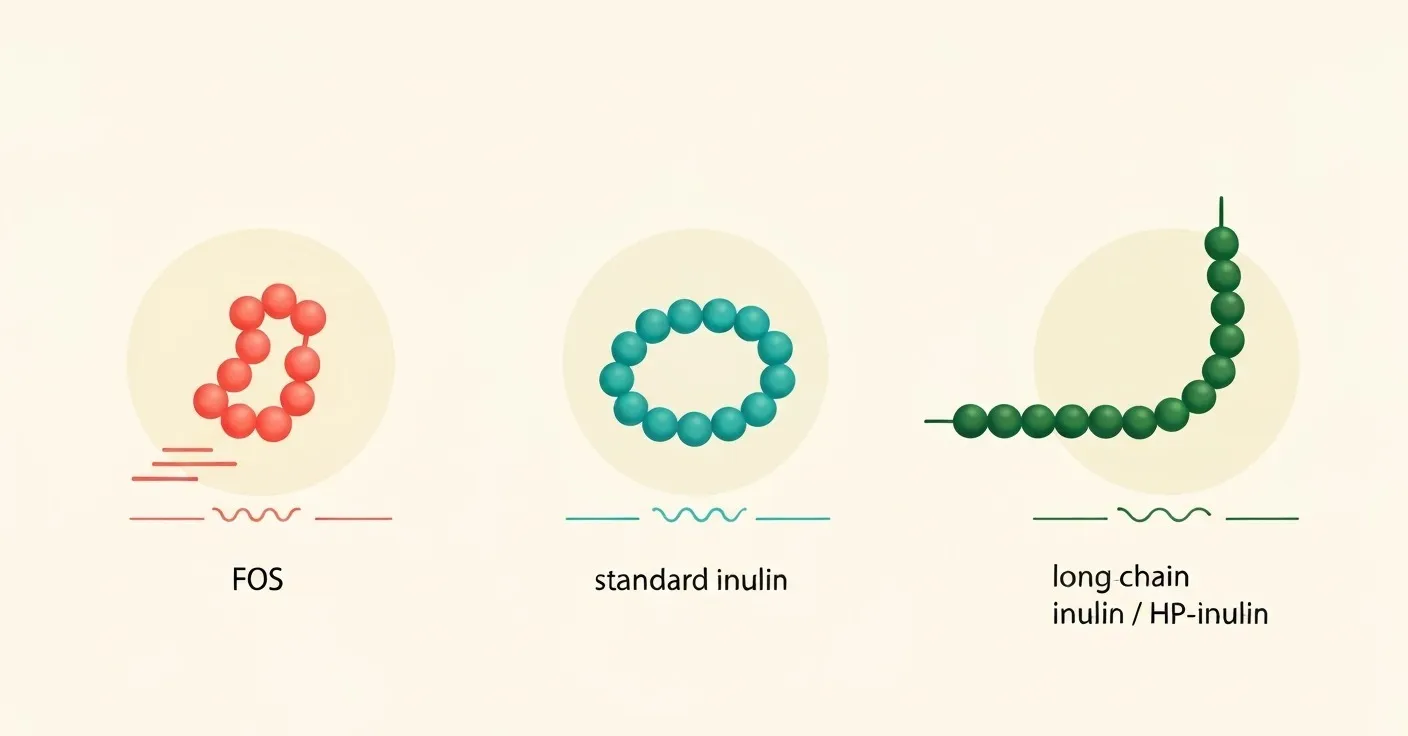
Inulin isn’t a single molecule; it’s a family of fructose polymers. Each chain is built from fructose units linked by β(2→1) bonds, with a single glucose unit capping one end. Chain length varies widely depending on the source and the processing method, ranging from a handful of fructose units to chains 60 units long or more. The longer the chain, the more slowly it tends to ferment. Shorter chains, sometimes labeled separately as oligofructose or fructo-oligosaccharides (FOS), ferment faster and more aggressively in the upper colon.
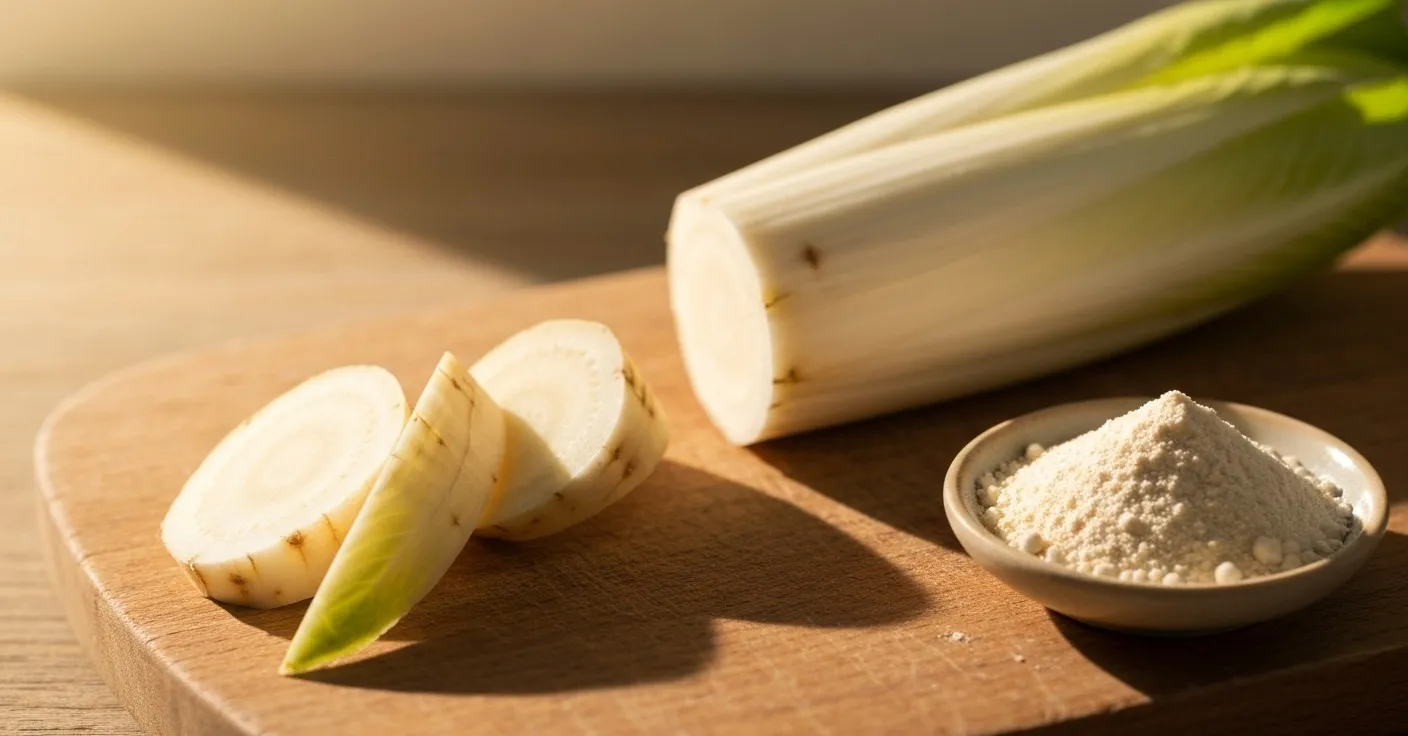
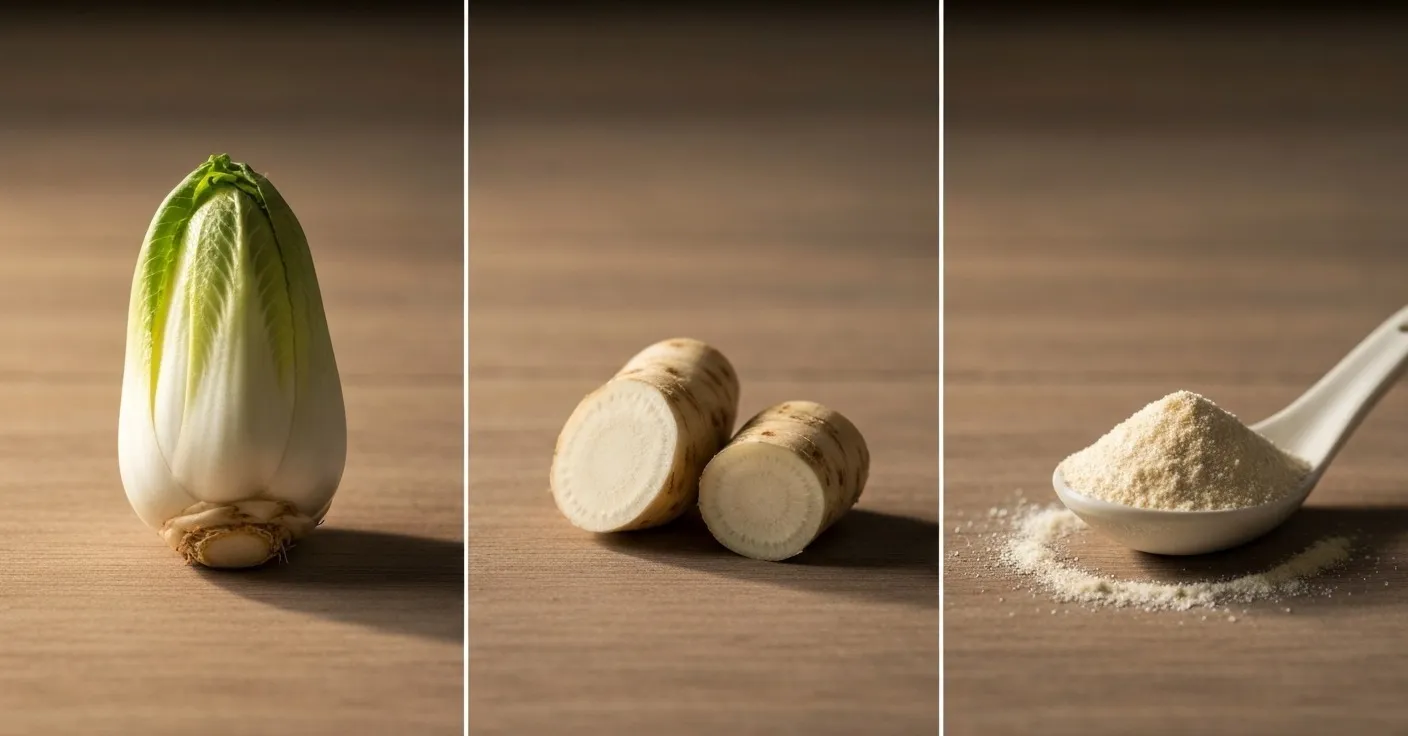
Commercially, most inulin used in pet supplements and human food is extracted from chicory root (Cichorium intybus), with smaller volumes coming from agave, Jerusalem artichoke, and dandelion. Chicory is the workhorse source because the root accumulates inulin as its winter energy store, and that storage form is relatively easy to extract with hot water and then dry into a fine, mildly sweet powder.
What makes inulin biologically interesting is what it isn’t. Mammals don’t produce the enzymes that cleave β(2→1) fructose bonds. So inulin moves through the stomach and small intestine essentially intact (Roberfroid, 2007). It arrives in the colon largely undigested, which is exactly where its function begins.
How inulin ferments in the gut
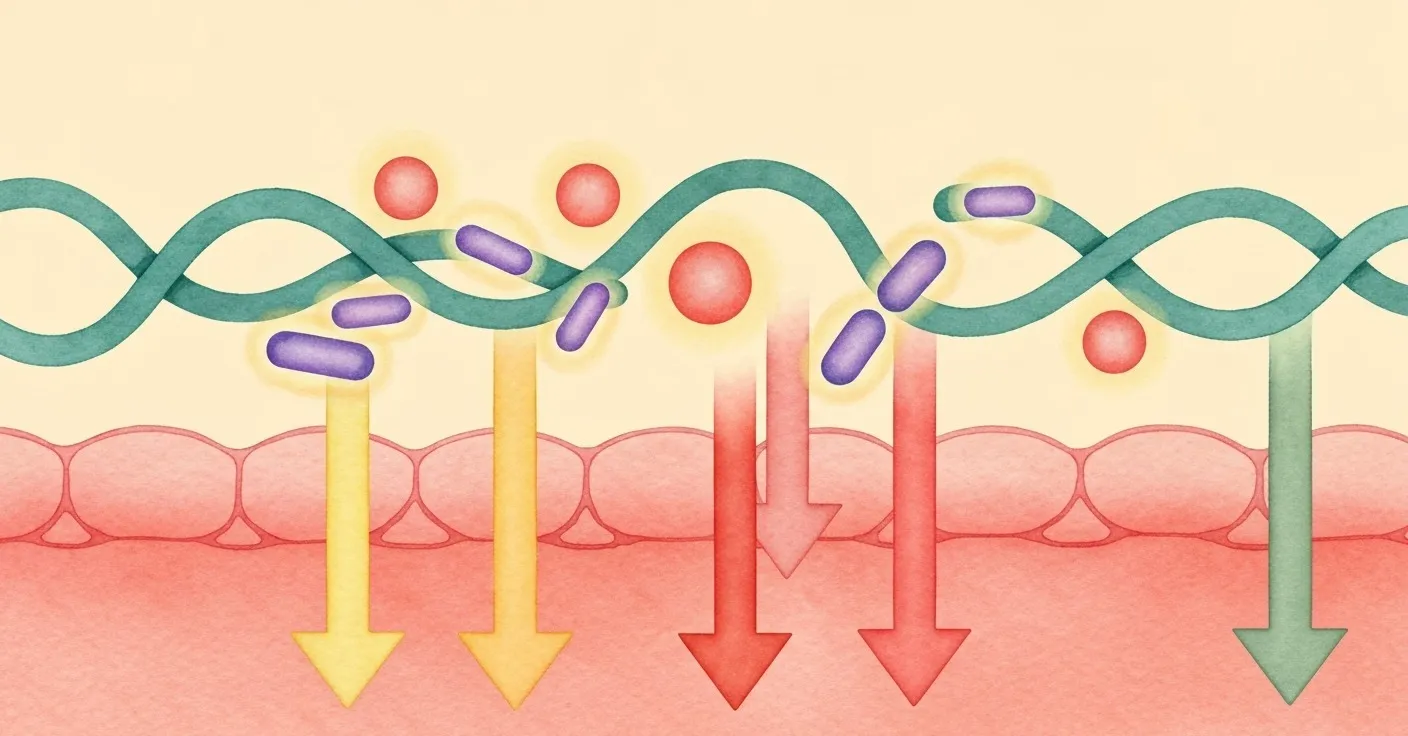
The official ISAPP definition of a prebiotic, refined in 2017, is “a substrate that is selectively utilized by host microorganisms conferring a health benefit” (Gibson et al., 2017). Inulin fits that definition cleanly. Specific bacterial populations in the colon, particularly Bifidobacterium species and several Lactobacillus species, possess the fructan-degrading enzymes needed to break down inulin’s β(2→1) linkages. They use the released fructose as a carbon source, multiplying in proportion to substrate availability.
The metabolic byproducts of that fermentation are short-chain fatty acids, principally acetate, propionate, and butyrate. Each of these has a distinct role. Butyrate is the preferred energy substrate for colonocytes, the cells lining the colon, and supports the integrity of the gut barrier. Propionate travels to the liver and helps modulate gluconeogenesis. Acetate enters general circulation and contributes to peripheral lipid metabolism (Bosch et al., 2009). Collectively, the SCFAs lower colonic pH, which suppresses several pathogenic genera that prefer a more neutral environment.
This is the core mechanism. Inulin doesn’t kill bad bacteria directly. It selectively feeds beneficial ones, and the shift in microbial composition produces a more acidic, more butyrate-rich colonic environment that’s broadly inhospitable to opportunistic pathogens.
Evidence in dogs and cats specifically
A lot of prebiotic marketing leans on human studies, which is a problem because dogs and cats aren’t humans. Their colons are shorter, their transit times faster, and in the case of cats, their entire evolutionary history is built around obligate carnivory (Verbrugghe & Hesta, 2017). That said, there’s a real and growing body of veterinary work on inulin and related fructans.
In dogs, Swanson et al. (2002) showed that supplementation with FOS and inulin increased fecal Bifidobacterium and Lactobacillus concentrations, lowered fecal pH, and modestly increased SCFA output. Beloshapka et al. (2013) extended this with a more refined fermentation analysis, finding that fructan supplementation in healthy adult dogs reproducibly shifted colonic microbial composition in directions associated with improved gut barrier function. Pinna and Biagi (2014) reviewed the broader canine literature and concluded that fructans qualify as functional ingredients with measurable microbial effects, while noting that the magnitude of clinical benefit varies between studies and depends heavily on the baseline state of the animal.
The picture in cats is more mixed. Sparkes et al. (1998) ran one of the earliest controlled trials on FOS in cats and found that supplementation altered fecal microbial counts without dramatically changing fecal scores or general health markers. Garcia-Mazcorro et al. (2011) characterized the feline microbiome and confirmed that the feline colonic environment is fermentation-active enough to respond to prebiotic substrates, though the magnitude of bifidogenic response was generally smaller than in dogs. Cats appear to be more sensitive to high doses of rapidly fermentable fructans, which helps explain why some feline prescription diets deliberately avoid them.
The takeaway: inulin works as a prebiotic in companion animals, but the response is dose-dependent and species-specific. It’s not magic, and it’s not interchangeable across species at the same dose.
How inulin compares with psyllium
Inulin and psyllium seed husk both end up in digestive support formulas, and owners sometimes assume they’re doing roughly the same job. They’re not. The two fibers occupy almost opposite ends of the fermentability spectrum, and they support gut health through different mechanisms.
Psyllium is predominantly a soluble, gel-forming fiber. It hydrates into a viscous mucilage that lubricates the GI tract, normalizes stool consistency, and reaches the colon mostly intact for slow, partial fermentation. Its primary value is mechanical: lubrication, stool quality, and gentle motility support. It’s modestly prebiotic, but that’s a secondary effect.
Inulin is a highly fermentable, non-gelling fiber. It doesn’t add meaningful bulk to stool. It doesn’t lubricate. What it does is feed specific bacterial populations rapidly and produce a strong SCFA response in the upper colon. Its value is microbial, not mechanical.
This is why thoughtful formulators sometimes use both, in modest amounts, rather than choosing one over the other. They aren’t redundant. They’re complementary. Psyllium creates the physical conditions for healthy transit; inulin feeds the bacterial populations that maintain the colonic environment. Where you see a product using only one or the other, the choice usually reflects the specific outcome the formula is built around (Slavin, 2013).
Inulin vs. FOS and oligofructose
Inulin, FOS, and oligofructose get used loosely as if they were the same thing. They’re not, but they’re closely related, and the differences come down to chain length.
Full-length inulin from chicory typically has an average degree of polymerization (DP) somewhere between 10 and 60 fructose units per molecule. Oligofructose is what you get when inulin is enzymatically hydrolyzed into shorter chains, typically DP 2–10. FOS is essentially the same product category as oligofructose, with the term used more commonly in older literature and in product labeling.
Shorter chains ferment faster. Faster fermentation means a quicker rise in SCFAs and a quicker drop in colonic pH, but it also means a more concentrated gas-production episode in the proximal colon. Longer-chain inulin ferments more slowly, distributing fermentation activity further along the colon and producing less acute gas (Roberfroid, 2007). For animals prone to flatulence or GI sensitivity, longer-chain inulin tends to be better tolerated than FOS at equivalent doses.
Some manufacturers use a blend specifically to distribute the fermentation activity across the colon: a fast-fermenting FOS fraction to support the proximal colon, plus longer-chain inulin to extend the substrate availability into the distal colon. When you see “chicory root extract” on a label without further specification, you’re often looking at exactly that kind of blended fractionation.
Dosing and the bloat caveat
Inulin’s biggest practical limitation isn’t safety. It’s tolerance. Introduced too quickly or at too high a dose, inulin reliably causes flatulence, abdominal gurgling, occasional loose stool, and the kind of bloating that owners describe as a tight, gas-filled belly. None of this is dangerous in healthy animals, but it’s unpleasant, and it’s the most common reason owners stop using prebiotic-containing supplements before the gut has time to adapt (Apper et al., 2020).
The mechanism is straightforward. The resident microbiome ferments whatever substrate is available, and the gas production scales with substrate quantity. A microbiome that hasn’t seen substantial inulin before doesn’t have an expanded bifidobacterial population ready to handle a large bolus. The fermentation happens anyway, but more of it occurs in a less specialized, more gas-producing pattern. Given two to three weeks of gradual exposure, the bifidobacterial population expands, the fermentation profile shifts toward more efficient SCFA production, and the gas calms down.
The practical implication: start low and ramp up. For dogs, a starting dose of 0.5–1 gram per day with gradual increase over three weeks to 2–4 grams (depending on body size) is generally well-tolerated. For cats, the windows are narrower. Many cats handle 0.25–0.5 grams per day well, but doses above 1 gram per day are where tolerance often breaks. Cats with known FOS sensitivity should be approached more cautiously, sometimes with longer-chain inulin only or with a non-inulin prebiotic alternative.
Hydration matters too. Fermentable fibers pull water into the colon, and inadequate water intake can amplify the loose-stool side of the side-effect spectrum. Cats eating only dry food may need encouragement toward more water consumption when introducing any prebiotic.
Where inulin fits in a synbiotic strategy
The term “synbiotic” refers to a product that combines probiotic strains with a prebiotic substrate, with the intent that the prebiotic feeds the probiotic strains and supports their colonization in the gut. The logic is appealing. The execution depends entirely on whether the prebiotic actually feeds the probiotic strains in question.
Not every probiotic strain ferments inulin efficiently. Most Bifidobacterium species do. Many Lactobacillus species do. But certain spore-forming probiotic strains, including some Bacillus species used in veterinary products, derive less direct benefit from inulin as a substrate. When you see a synbiotic formula, it’s reasonable to ask whether the chosen prebiotic actually pairs with the chosen probiotic strains, or whether they were combined more out of marketing convention than mechanistic fit (Suchodolski, 2019).
When the pairing is thoughtful, the synergy is real. A product like the Petterm Probiotic Hairball Control Powder uses prebiotic fiber alongside probiotic strains chosen for their compatibility with that substrate, which is the kind of formulation logic worth looking for. The prebiotic doesn’t just sit there. It actively feeds the live cultures, helping maintain their presence and function in the gut environment they’re meant to support.
For broader context on how probiotic strains actually establish in the feline gut, our deep dive on probiotics for cats covers the colonization timeline and what “feeding” the bacteria really looks like in practice. And if you’re trying to evaluate whether your cat’s gut is in a healthy state to begin with, the guide on cat gut health signs walks through what to watch for before changing anything.
Where the evidence is honestly thin
It’s worth being clear about what inulin doesn’t have strong evidence for in companion animals. The claim that inulin meaningfully reduces allergy symptoms, improves coat quality, or modulates behavior through the gut-brain axis is biologically plausible but not well-supported by controlled veterinary studies. Most of the supporting work in these areas comes from rodent models or limited human trials. Extrapolating to dogs and cats is reasonable scientifically, but it’s extrapolation, not direct evidence.
Inulin’s strongest evidence base is what it was originally characterized for: bifidogenic response, SCFA production, lowered colonic pH, and effects on stool fermentation parameters in healthy animals (Pinna & Biagi, 2014). That’s a real and useful set of effects. But it’s a more modest claim than some products imply, and honest formulators don’t overreach beyond it.
Frequently asked questions
Is inulin safe for dogs and cats long-term? Yes, at appropriate doses inulin is well-tolerated long-term in healthy animals. It’s a naturally occurring carbohydrate found in many plant foods. The main reasons to pull back are GI tolerance issues at high doses or in animals with diagnosed sensitivities. Animals with diabetes or significant GI disease should have any new fiber introduced with veterinary guidance.
Why does inulin sometimes cause gas? Because it’s rapidly fermentable. Gas is a normal byproduct of bacterial fermentation, and inulin produces it efficiently. The fix is usually a slower introduction rather than abandoning the ingredient. A microbiome adapted to regular inulin exposure produces less gas per gram of substrate than one encountering it for the first time.
Can my cat have inulin? I’ve heard FOS can be a problem for cats. Many cats tolerate longer-chain inulin well at small doses. The concern is more pronounced with high-FOS products and with cats who have known GI sensitivity. Start very low (a quarter of label dose or less), watch for changes in stool quality and gas, and increase gradually. If your cat reacts even to low doses, it’s a sign their microbiome may not be a good match for fructan substrates, and a different prebiotic approach is reasonable.
How is inulin different from psyllium husk? Inulin feeds bacteria; psyllium provides mechanical bulk and lubrication. Inulin ferments quickly and produces SCFAs; psyllium ferments slowly and forms a gel. They support different aspects of GI function. Many well-designed formulas use both in modest amounts.
Will inulin help with diarrhea or constipation? Indirectly, sometimes. By supporting a more balanced colonic microbiome and increasing butyrate production, inulin can help maintain regular stool consistency over time. It isn’t a fast-acting solution for an acute episode, and a sudden dose of inulin into an already-irritated gut can worsen loose stool. For acute issues, address hydration and the underlying cause first.
Does inulin interact with medications? There aren’t significant pharmacokinetic interactions reported for inulin itself. However, animals on glucose-affecting medications should be monitored when adding any fermentable fiber, since fermentation byproducts can mildly influence systemic glucose handling. Check with your veterinarian if your pet takes prescription medication.
How long before I see benefit? The microbiome shifts measurably within two to four weeks of consistent daily intake. Whether you observe an outward change depends on what you’re looking for. Subtle improvements in stool quality and reduced GI grumbling are the most commonly noticed effects. Larger functional changes build over months.
When to contact your veterinarian
If your pet develops persistent loose stool, vomiting, or significant abdominal discomfort after starting any inulin-containing supplement, stop the product and contact your vet. These aren’t expected effects at appropriate doses, and they may indicate either an inappropriate dose, an underlying GI condition the supplement is amplifying, or an unusual sensitivity.
Also reach out to your vet before introducing inulin or any fermentable fiber if your pet has a diagnosed condition such as inflammatory bowel disease, exocrine pancreatic insufficiency, diabetes, or chronic kidney disease. Prebiotics are generally compatible with these conditions, but the right introduction protocol depends on the specifics, and a quick check-in beats a setback.
References
- Gibson, G.R., et al. (2017). Expert consensus document: The International Scientific Association for Probiotics and Prebiotics (ISAPP) consensus statement on the definition and scope of prebiotics. Nature Reviews Gastroenterology & Hepatology, 14(8), 491–502.
- Roberfroid, M.B. (2007). Inulin-type fructans: functional food ingredients. Journal of Nutrition, 137(11), 2493S–2502S.
- Pinna, C. & Biagi, G. (2014). The utilisation of prebiotics and synbiotics in dogs. Italian Journal of Animal Science, 13(1), 3107.
- Verbrugghe, A. & Hesta, M. (2017). Cats and carbohydrates: the carnivore fantasy? Veterinary Sciences, 4(4), 55.
- Suchodolski, J.S. (2019). Diagnosis and interpretation of intestinal dysbiosis in dogs and cats. Veterinary Journal, 215, 30–37.
- Sparkes, A.H., et al. (1998). Effect of dietary supplementation with fructo-oligosaccharides on fecal flora of healthy cats. American Journal of Veterinary Research, 59(4), 436–440.
- Beloshapka, A.N., et al. (2013). Fecal microbial communities of healthy adult dogs fed raw meat-based diets with or without inulin or yeast cell wall extracts. FEMS Microbiology Ecology, 84(3), 532–541.
- Garcia-Mazcorro, J.F., et al. (2011). Effect of the proton pump inhibitor omeprazole on the gastrointestinal bacterial microbiota of healthy dogs and cats. FEMS Microbiology Ecology, 76(2), 301–310.
- Slavin, J. (2013). Fiber and prebiotics: mechanisms and health benefits. Nutrients, 5(4), 1417–1435.
- Bosch, G., et al. (2009). Impact of dietary fiber on fermentation products and microbiota in the canine colon. British Journal of Nutrition, 102(2), 318–325.
- Swanson, K.S., et al. (2002). Supplemental fructooligosaccharides and mannanoligosaccharides influence immune function, ileal and total tract nutrient digestibilities, microbial populations and concentrations of protein catabolites in the large bowel of dogs. Journal of Nutrition, 132(5), 980–989.
- Apper, E., et al. (2020). Pet food microbial quality and modulation of the gut microbiota: a review. Animals, 10(11), 1985.
Researched and reviewed by the Petterm Editorial Team · Last reviewed May 2026
This article is for educational purposes and is not veterinary medical advice. Petterm products are not intended to diagnose, treat, cure, or prevent any disease. Results may vary. Always consult your veterinarian before introducing a new supplement, especially if your pet has an existing digestive condition or takes medication.