


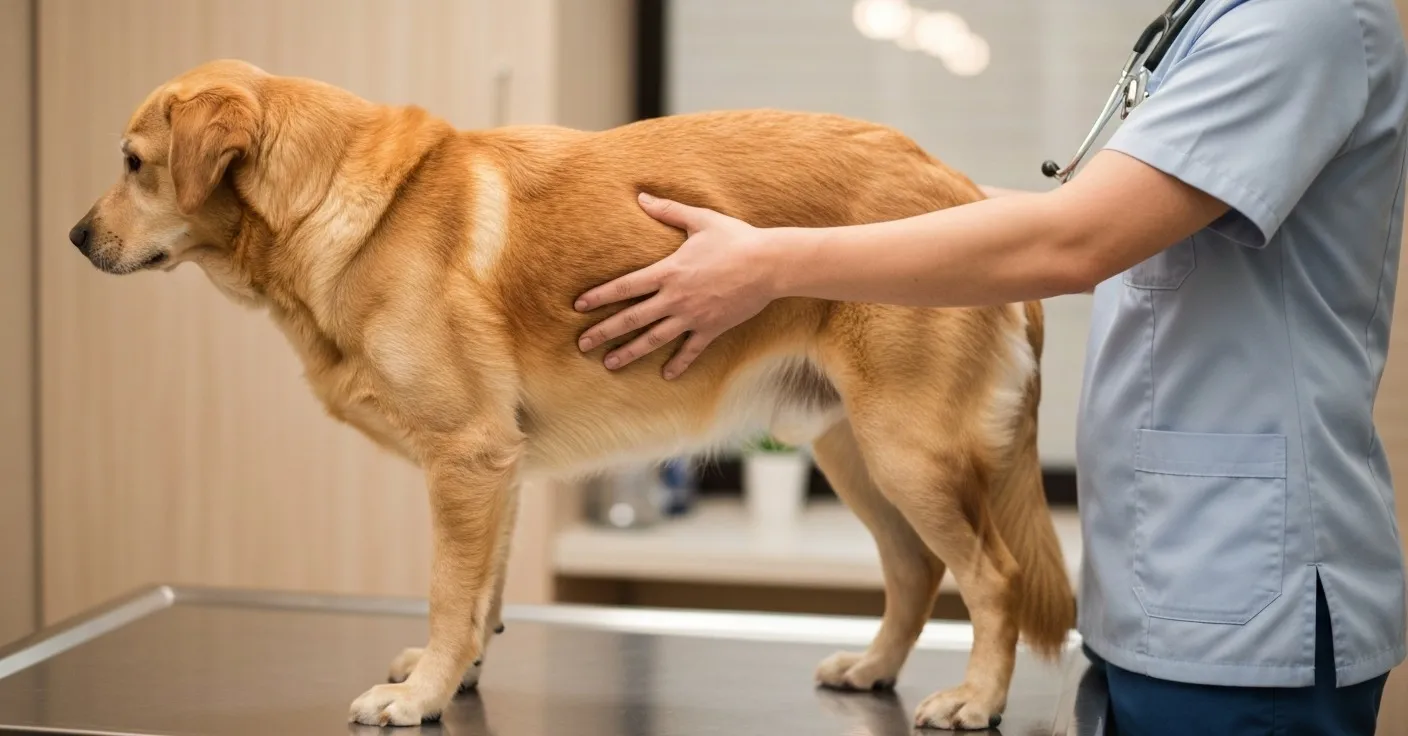
My neighbor’s Labrador, Odie, is one of those dogs who has always looked exactly the same. Same broad chest, same solid hips, same way of pressing himself against your leg when he wants attention. So when she mentioned at the dog park that he hadn’t been finishing his meals lately, I took a second look. He still seemed big. But when I ran my hand along his spine, the vertebrae were right there under my fingers — no padding at all. His ribs were easy to count. She’d been looking at him every day for ten years, and the change had crept in so gradually she simply hadn’t noticed.
That’s the hardest thing about weight loss in dogs. Fur hides a lot. A medium or large dog can lose four or five pounds — which is significant relative to their total mass — before it becomes visible to even an attentive owner. By the time the ribs are obviously protruding or the belly looks tucked from across the room, the process has usually been going on for weeks or months.
Odie turned out to have stage 2 chronic kidney disease. His reduced appetite had been the first sign, but his owner had interpreted it as pickiness, not illness. With dietary management and close monitoring, he’s been stable for two years. But the earlier that kind of finding gets made, the more options you have.
Using body condition scoring to see past the fur
Body condition scoring, or BCS, is the standardized system veterinarians use to assess how much fat and muscle a dog carries relative to their frame. Most clinics use a nine-point scale: a score of 4–5 is ideal, scores of 1–3 indicate underweight, and scores of 6–9 indicate overweight. You don’t need a vet visit to get a rough read.
Three checks give you the most information.
The rib check. Place both thumbs on your dog’s spine and fan your fingers out over the rib cage. In an ideal-weight dog, you should be able to feel each rib with light pressure — they’re there, but covered by a thin layer of fat. If you can feel the ribs without pressing at all, or if the spaces between them are visibly pronounced, your dog is underweight. If you have to press firmly to find them under a thick fat pad, they’re overweight (German et al., 2009).
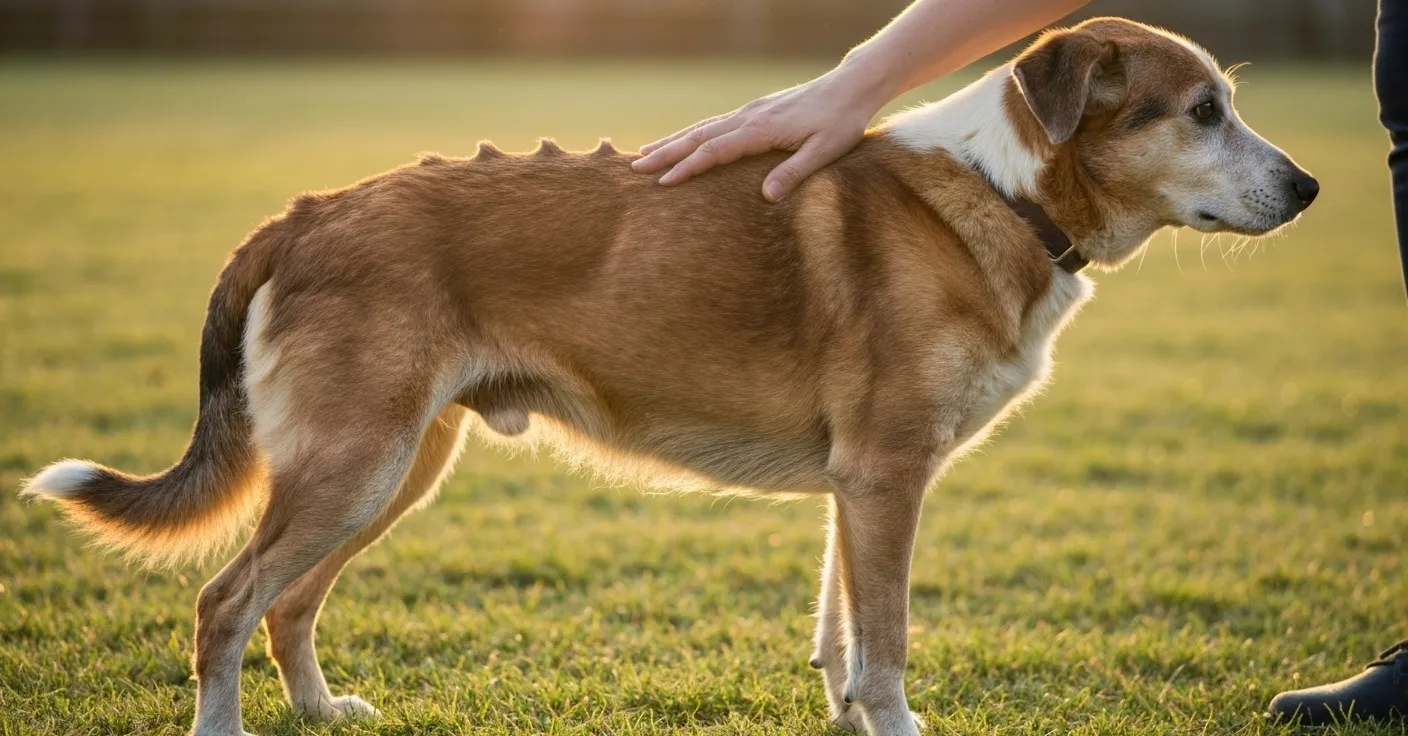
The spine check. Run your fingers along the tops of the lumbar vertebrae — the part of the spine above the hips. An ideal BCS means those processes are palpable but not prominent. When a dog is losing body mass, the spinous processes are often the first thing you can feel, and eventually see, clearly. What looks like a subtle ridge along the back is a meaningful finding.
The belly tuck and waist check. Standing above your dog and looking down, you should see a visible narrowing of the waist behind the rib cage. From the side, there should be a slight upward tuck of the abdomen behind the ribs. A dog who looks perfectly cylindrical from above, or whose belly hangs level with the rib cage from the side, is carrying excess weight. A dog whose tuck is extreme — whose belly rises sharply to a narrow waist, or whose hip bones are visible — is likely underweight (Laflamme, 1997).
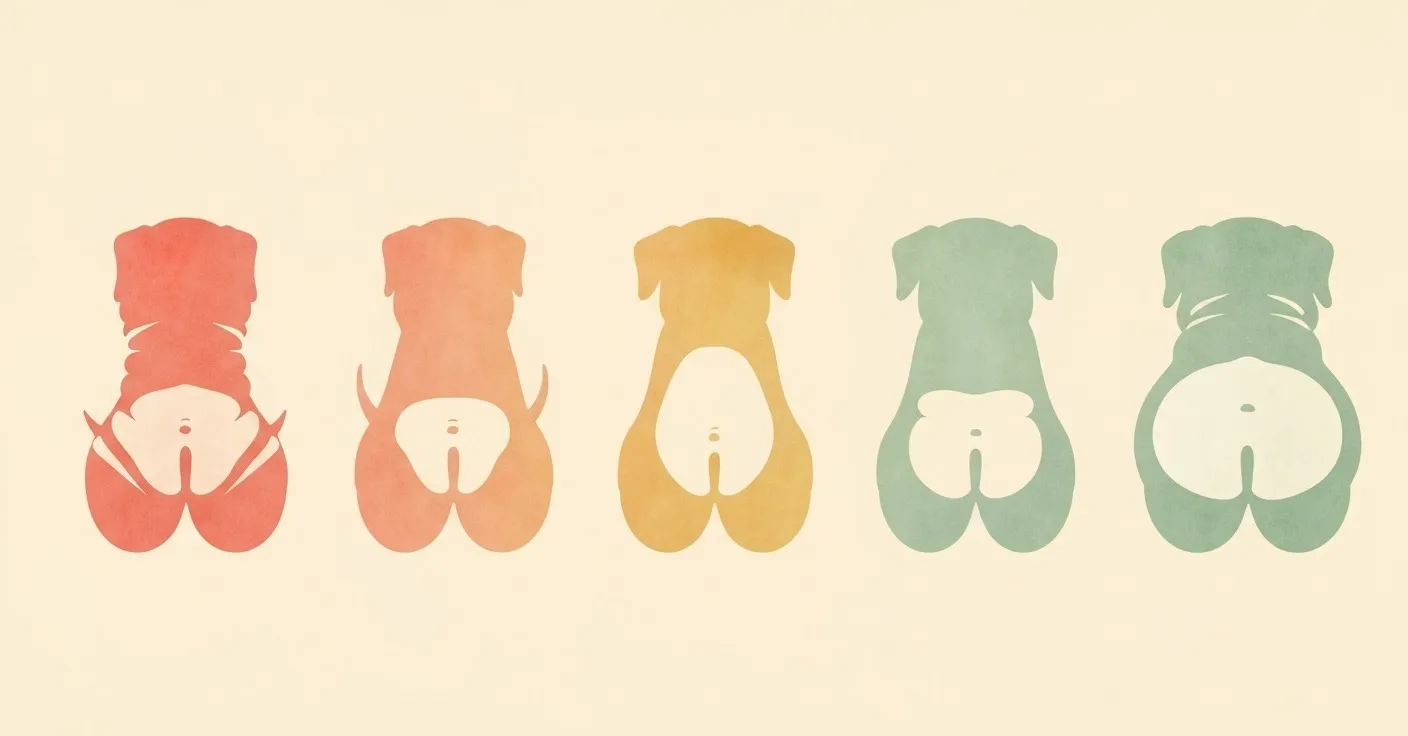
These checks are most useful when done regularly — monthly, on the same day you trim nails or do a quick coat check — so you have a baseline to compare against. A dog who scores 4 one month and 3 the next has lost body mass meaningfully, even if they look the same in photos.
Muscle wasting vs. fat loss: they’re not the same thing
Most owners think of weight loss as losing fat. But dogs — particularly seniors, sick dogs, and dogs under metabolic stress — can lose muscle mass while their fat stores stay relatively intact. This is called muscle wasting, or in more chronic presentations, sarcopenia. It looks different from fat loss and points to different underlying causes.
Fat loss shows up first in the areas where fat is stored: over the ribs and spine, across the rump, and in the loose skin of the chest and flanks. A dog losing fat looks lighter all over. Their coat may still look full, but the architecture underneath is diminishing.
Muscle wasting tends to show first over the shoulders, along the spine, and especially at the hindquarters. The muscles over the temporal bones on either side of the skull — the temporalis muscles — are visible at the top of the head and they atrophy early in systemic illness; you’ll notice hollowing above the eyes. The thigh muscles thin noticeably, and dogs may start to look somewhat slab-sided even when their belly tuck looks normal.
A dog can lose significant lean muscle mass while maintaining an apparently normal overall weight, especially if they’re simultaneously putting on fat — a combination called sarcopenic obesity that’s common in sedentary middle-aged and senior dogs. Their scale weight hasn’t changed, but their body composition has shifted in an unfavorable direction (Freeman et al., 2006).
This distinction matters clinically because the causes are different. Muscle wasting that happens faster than any caloric deficit can explain — particularly in seniors — may indicate protein malabsorption, inflammatory disease, cancer, or organ failure even before the scale moves. If you notice the hindquarters and spine looking visibly thinner while the scale says the same number, that’s a vet conversation.
For dogs with diagnosed muscle loss, supporting recovery with Petterm Muscle Gain Soft Chews can help maintain lean mass alongside a vet-directed nutrition plan. They’re formulated to support muscle maintenance in dogs with unintended loss — not a substitute for diagnosis, but a reasonable adjunct once the cause is understood.
Common causes by age bracket
Weight loss doesn’t happen in a vacuum, and the most likely cause shifts meaningfully depending on your dog’s life stage.
Puppies and young adults (under 2 years)
Young dogs losing weight despite eating — or eating ravenously and still appearing thin — are usually dealing with one of three things. Intestinal parasites, particularly roundworms and hookworms, are common in puppies and can outpace a puppy’s caloric intake dramatically. Malabsorption syndromes like exocrine pancreatic insufficiency (EPI), though uncommon, present early in life in certain breeds, especially German Shepherds; affected dogs eat large amounts but fail to digest and absorb nutrients properly (Batt et al., 1983). Simple inadequate feeding — particularly in multi-dog households where one animal outcompetes others at the bowl — is also more common than most owners realize.
If your young dog is thin despite what seems like an adequate diet, a fecal test for parasites is the fastest and cheapest first step.
Adult dogs (2–7 years)
In the adult dog population, dental disease is one of the most underappreciated drivers of weight loss. Severe periodontal disease makes eating painful enough that dogs reduce intake significantly — often while acting interested in food but approaching the bowl hesitantly, or dropping kibble repeatedly. A dog who used to finish meals in under a minute and now takes twenty may be telling you their mouth hurts.
Stress-related anorexia is also genuinely common in this group: a house move, the addition of a new pet, a change in household schedule, or the loss of a companion animal can suppress appetite for days to weeks. Dietary changes that produce gastrointestinal upset without overt diarrhea sometimes reduce intake without the owner connecting the two events.
Underlying systemic diseases — inflammatory bowel disease, Addison’s disease, hyperthyroidism (rare in dogs, but it occurs, particularly in Golden Retrievers and other breeds), and early diabetes — can all present as unexplained weight loss in an adult dog who appears otherwise normal (Mooney, 2011).
Senior dogs (8 years and older)
Seniors carry the longest differential diagnosis list for weight loss, and the most serious. Sarcopenia — age-related muscle loss — is universal in aging dogs and can progress without any disease present, simply as a consequence of reduced activity and declining muscle protein synthesis (Hutchinson et al., 2012). But sarcopenia that progresses faster than expected, or that’s accompanied by reduced appetite, is a flag for something else.
Chronic kidney disease (CKD) is one of the most common senior-dog diagnoses, and weight loss through reduced appetite, nausea, and muscle wasting is a hallmark presentation. Cancer — of various types — often presents with weight loss before other obvious signs appear. Cardiac disease can reduce appetite and increase metabolic demand simultaneously. Diabetes in dogs produces a specific pattern: ravenous appetite with simultaneous weight loss, increased drinking and urination. Any of these requires blood work, urinalysis, and sometimes imaging to identify.
Early signs owners frequently miss
The most actionable information about canine weight loss isn’t the obvious end-stage picture — visible ribs, prominent hip bones, hollow flanks — it’s the early signals that come weeks or months before.
The temporal muscles hollow first. Look at your dog head-on and check whether the sides of the skull, just above and behind the eyes, look full and rounded or slightly sunken. This is one of the most reliable early indicators of lean mass loss, and it’s visible before spine or rib changes become obvious.
Coat changes often precede visible weight changes. A dog who’s losing muscle mass or not absorbing protein well may develop a duller coat, increased shedding, or a change in coat texture before the scale reflects anything. It’s not a specific finding — coat quality changes for many reasons — but in combination with anything else on this list, it’s worth noting.
Reduced endurance and enthusiasm for activity are easy to attribute to aging, heat, or a quiet day. But a dog who used to run laps around the yard and now walks halfway and lies down, or who starts hanging back on the leash earlier than usual, is telling you something. Energy drop is one of the earlier symptoms of muscle mass decline and systemic illness alike.
Meal hesitancy — sniffing the bowl, walking away, returning ten minutes later — gets dismissed as pickiness constantly. Sometimes it is. More often it indicates dental pain, nausea, reduced appetite from illness, or food aversion. A dog who was previously a reliable, enthusiastic eater and has become inconsistent is worth watching closely.
How fast is too fast?
Rate of loss matters as much as absolute weight. A dog who drops 1–2% of their body weight over several months without a clear dietary explanation — say, a 50-pound dog losing half a pound to a pound over two months with no change in feeding — is in the watch-carefully range. A dog who loses 5% or more of body weight over two to four weeks has lost weight at a rate that warrants a vet visit regardless of whether they look obviously thin (Freeman et al., 2015).
For context: a 10% body weight loss in a dog (5 pounds on a 50-pound dog) is clinically significant. A 20% loss is associated with immune compromise, delayed wound healing, and poor surgical outcomes in dogs undergoing treatment for concurrent disease.
If you don’t weigh your dog regularly, your vet’s scale at annual visits is the comparison point — but annual intervals are long enough to miss meaningful trends. A home scale large enough to hold your dog, used monthly, catches changes that clinic visits miss.
When to Act: A Three-Tier Guide
Watch at home (1–2 weeks)
Your dog has lost a small amount of weight — half a pound to a pound — and you can identify a likely explanation: a recent food transition, a spell of hot weather that suppressed appetite, or a stressful week with houseguests. They’re eating, drinking, active, and their BCS is in the normal range. Monitor meals closely for the next two weeks. Weigh them again in seven days. If weight stabilizes and returns, no action is needed beyond ruling out dental discomfort and ensuring they’re eating in a low-competition environment. Our guide to helping underweight dogs gain muscle covers appropriate feeding adjustments during a monitored recovery.
Call your vet within 24–48 hours
Your dog has lost 5% or more of their body weight over the past month without an obvious explanation. They’re eating noticeably less than usual, or they’ve started being hesitant or inconsistent about meals. You’ve noticed temporal hollowing, thinner thighs, or a more prominent spine. They’re a senior dog and the change has come on over several weeks. Their energy or endurance has dropped alongside the weight change. These signs don’t necessarily mean something serious, but they do mean something, and the sooner bloodwork and a physical exam happen, the sooner you know what you’re dealing with. Early findings in CKD, diabetes, and thyroid disease all respond better to management when caught before significant body mass is gone.
Seek immediate care
Your dog has lost weight rapidly — noticeably so over a week or two — and is also vomiting, having diarrhea, or refusing food entirely. They’re lethargic, weak in the hindquarters, or unable to rise easily. They’ve collapsed or had any seizure-like episode. There is visible abdominal distension alongside weight loss (which can indicate fluid accumulation from cardiac, hepatic, or neoplastic disease). They’ve stopped drinking or are drinking excessively alongside rapid weight loss. Any of these combinations can indicate a medical emergency — cardiac decompensation, diabetic crisis, intestinal obstruction, acute kidney injury, or hemorrhagic disease. Don’t wait.
What the vet workup looks like
Unexplained weight loss prompts a reasonably standard initial workup in most veterinary practices, though the specifics vary depending on your dog’s age and what the physical exam finds.
A complete blood count (CBC) checks for anemia, infection, and inflammatory markers. A chemistry panel covers kidney function (BUN, creatinine, phosphorus), liver enzymes, blood glucose, and total protein — all relevant to the most common systemic causes of weight loss. Urinalysis with sediment examination adds another window into kidney function and can catch early diabetes. A fecal test rules out parasites.
Depending on what those baseline tests show, the vet may recommend thyroid testing (total T4 or free T4), abdominal ultrasound to visualize the lymph nodes and organs, chest radiographs for cardiac or pulmonary disease, or a TLI (trypsin-like immunoreactivity) test to screen for EPI.
Senior dogs with unexplained weight loss often get a more comprehensive panel at the outset, since the diagnostic list is longer and the value of early detection is higher.
For dogs found to have muscle loss as part of the picture — either from a primary disease or as sarcopenia — a structured muscle-building exercise program can slow progression and support recovery. Our guide to senior dog muscle building exercises covers which movements are safe and effective across different fitness levels.
Frequently Asked Questions
How much weight loss in a dog is concerning?
A loss of 5% or more of body weight — 2.5 pounds on a 50-pound dog — without a clear explanation warrants a vet call. Losses over 10% are clinically significant. The rate matters as much as the total: losing 5% over six months is different from losing 5% over three weeks.
Can stress cause weight loss in dogs?
Yes. Stress and anxiety can suppress appetite enough to produce real weight loss, especially in dogs with separation anxiety, a recent major environmental change, or a history of food aversion. That said, stress should be a diagnosis of exclusion rather than an assumption — it’s worth ruling out physical causes first.
My senior dog is eating fine but still losing weight. What does that mean?
A dog who eats a consistent amount but loses weight anyway is either burning more calories than they’re taking in, or failing to absorb what they eat. In seniors, both are possible. Increased metabolic demand from disease (cancer, cardiac disease, hyperthyroidism) and malabsorption from EPI, IBD, or intestinal disease are the main culprits. A vet visit with bloodwork is the right move.
Is muscle loss the same as weight loss?
Not exactly. A dog can lose significant muscle mass while their scale weight stays flat — or even increases — if fat accumulates simultaneously. Check body composition, not just scale weight. Temporal hollowing, thinning hindquarters, and a visible spine ridge signal muscle loss even when body weight appears normal.
What should I feed a dog that’s losing weight?
This depends entirely on the cause. A dog losing weight due to inadequate calories needs more food; a dog with kidney disease needs a phosphorus-restricted diet; a dog with EPI needs enzyme supplementation; a dog with cancer may benefit from a lower-carbohydrate, higher-fat formulation. Feed appropriately for the diagnosis rather than simply adding more of whatever they currently eat. Work with your vet.
How do I weigh my dog at home?
Weigh yourself first, then pick up your dog and step back on the scale. Subtract your weight from the combined weight. For large dogs, you may need a purpose-built pet scale or ask your vet to let you use theirs between visits. Consistent monthly weights on the same scale give you the most meaningful trend data.
Can intestinal parasites cause weight loss in adult dogs?
Yes, though it’s more dramatic in puppies. A heavy intestinal parasite burden in an adult dog — particularly hookworms or whipworms — can produce meaningful weight loss and anemia, especially in dogs who are frequently exposed (dog parks, outdoor runs, regions with endemic parasites). Annual fecal testing is worth doing regardless of deworming history.
At what age does muscle loss become normal in dogs?
Some degree of age-related muscle loss (sarcopenia) begins as early as seven years in large and giant breeds, and around nine to ten years in smaller breeds. It’s not entirely preventable, but it’s modifiable — appropriate protein intake and regular, controlled exercise are the two best-studied tools for slowing it (Hutchinson et al., 2012).
When to Contact Your Veterinarian
Watch at home: A small, explainable weight loss (less than 5% of body weight) in a dog who is eating, drinking, active, and showing no other symptoms. A puppy or young dog who lost weight briefly during a stressful event and has begun eating normally again. A dog switching foods who had a two-week appetite dip during the transition. Monitor with monthly weigh-ins and a return visit to the BCS checks above.
Call your vet within 24–48 hours: A weight loss of 5% or more without a clear explanation. Gradual appetite reduction that’s been going on for two or more weeks. New temporal hollowing, visible spine prominence, or thinning of the hindquarters in a dog whose scale weight hasn’t changed much. Any combination of weight loss and coat quality change, energy decline, or meal hesitancy. A senior dog who’s losing weight at all, even slowly.
Seek immediate veterinary care: Rapid weight loss over days to a week. Weight loss paired with vomiting, diarrhea, complete food refusal, or collapse. Extreme lethargy or inability to rise. Visible abdominal distension alongside weight loss. Excessive drinking and urination alongside weight loss (possible diabetic crisis). Any loss of consciousness or seizure-like episode. These presentations can represent medical emergencies where hours matter.
References
- German, A.J., Holden, S.L., Moxham, G.L., Holmes, K.L., Hackett, R.M., & Rawlings, J.M. (2009). A simple, reliable tool for owners to assess the body condition of their dog or cat. Journal of Nutrition, 139(6), 1937S–1941S.
- Laflamme, D.P. (1997). Development and validation of a body condition score system for dogs. Canine Practice, 22(4), 10–15.
- Freeman, L.M., Rush, J.E., Kehayias, J.J., Ross, J.N., Meydani, S.N., Brown, D.J., Dolnikowski, G.G., Marmor, B.N., White, M.E., & Dinarello, C.A. (2006). Nutritional alterations and the effect of fish oil supplementation in dogs with heart failure. Journal of Veterinary Internal Medicine, 12(6), 440–448.
- Freeman, L.M., Becvarova, I., Cave, N., MacKay, C., Nguyen, P., Rama, B., Takashima, G., Tiffin, R., van Beukelen, P., & Yathiraj, S. (2015). WSAVA nutritional assessment guidelines. Journal of Small Animal Practice, 52(7), 385–396.
- Batt, R.M., Bush, B.M., Peters, T.J., & Riley, J.E. (1983). Biochemical changes in the jejunal mucosa of dogs with naturally occurring exocrine pancreatic insufficiency. Gut, 24(5), 460–466.
- Hutchinson, D., Sutherland-Smith, J., Watson, A.L., & Freeman, L.M. (2012). Assessment of methods of evaluating sarcopenia in old dogs. American Journal of Veterinary Research, 73(11), 1794–1800.
- Mooney, C.T. (2011). Hyperthyroidism. In S.J. Ettinger & E.C. Feldman (Eds.), Textbook of Veterinary Internal Medicine, 7th ed. (pp. 1761–1779). Elsevier Saunders.
- Fascetti, A.J. & Delaney, S.J. (2012). Applied Veterinary Clinical Nutrition. Wiley-Blackwell.
- O’Brien, M.A. (2010). Hyperadrenocorticism and hypoadrenocorticism in dogs. In C.G. Couto & R.W. Nelson (Eds.), Small Animal Internal Medicine, 4th ed. (pp. 879–898). Mosby Elsevier.
- Elliott, D.A. (2006). Nutritional management of chronic renal disease in dogs and cats. Veterinary Clinics of North America: Small Animal Practice, 36(6), 1377–1384.
- Mauldin, G.N. (2006). Nutritional support of the cancer patient. In D.M. Vail & R.L. Page (Eds.), Withrow and MacEwen’s Small Animal Clinical Oncology, 4th ed. (pp. 307–318). Saunders Elsevier.
- Zoran, D.L. (2008). Obesity in dogs and cats: a metabolic and endocrine disorder. Veterinary Clinics of North America: Small Animal Practice, 40(2), 221–239.
Reviewed by the Petterm Editorial Team. Last updated May 2026.
This article is for informational purposes only and does not constitute veterinary medical advice. Always consult a licensed veterinarian before making changes to your pet’s diet, supplement routine, or health management plan.