


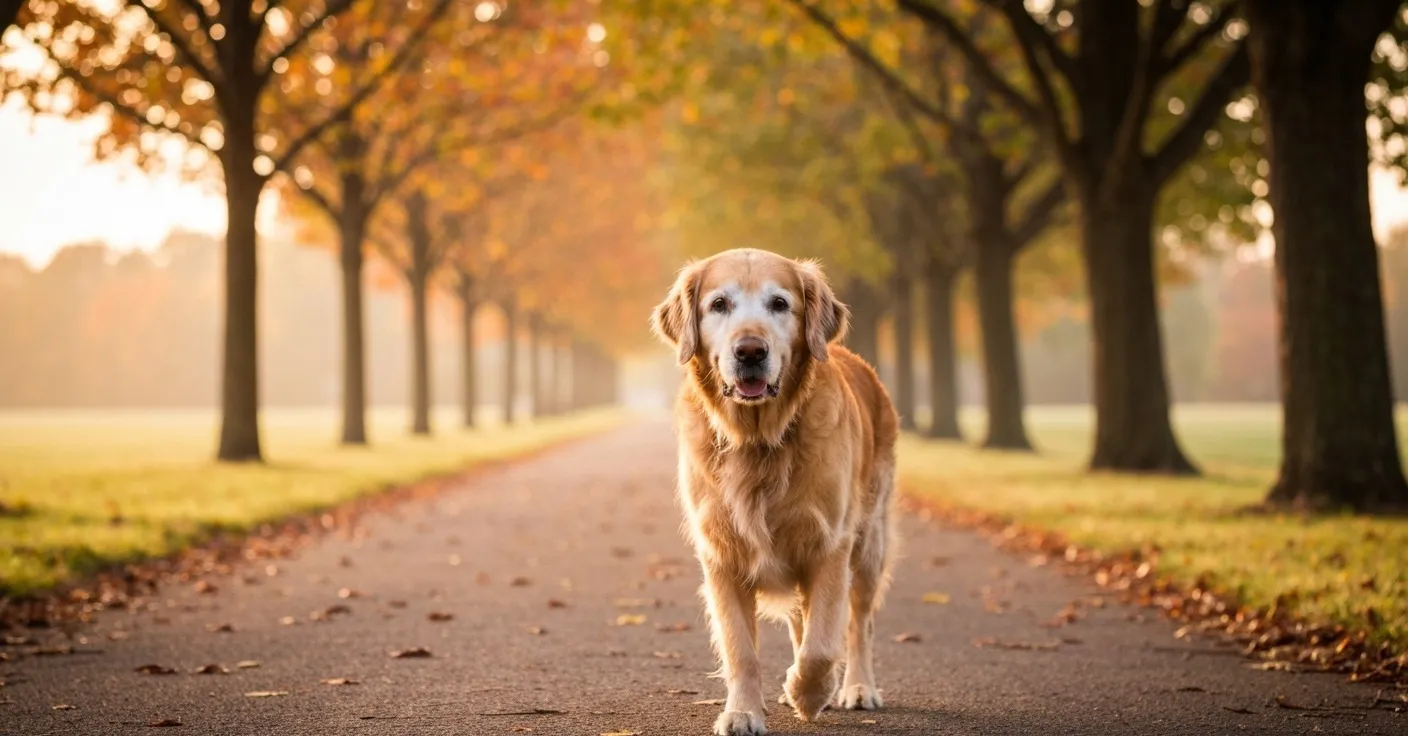
A few autumns ago a woman named Priya brought her ten-year-old Golden Retriever, Banjo, into the clinic because he’d stopped wanting to jump into the back of the car. She’d already made what she thought was the responsible decision: she’d cut his daily walks from forty-five minutes down to ten, and she’d stopped taking him to the lake on weekends. “I figured he’d earned a rest,” she said, scratching the soft spot behind his ear. Banjo’s topline had narrowed since I’d last seen him. His shoulders looked flatter. When I asked him to stand square so I could palpate his hips, he shifted weight off the right side almost immediately, and the muscle over that thigh felt soft in a way it hadn’t a year before. Priya wasn’t being lazy. She was being kind. She was also, slowly and with the best intentions, dismantling the muscle that was holding her dog’s joints together.
Senior doesn’t mean one age
The first thing that derails most exercise plans for older dogs is the assumption that “senior” describes a single life stage. It doesn’t. A dog’s biological age is tightly linked to body size, and the gap between breeds is bigger than most owners realize. A Great Dane is geriatric by six. A Yorkshire Terrier may not show any age-related changes until eleven or twelve. The same calendar year means something completely different in those two bodies (Greer et al., 2007).
The most usable rough framework comes from longevity research and applied veterinary geriatrics:
- Giant breeds (Great Dane, Mastiff, Saint Bernard, Irish Wolfhound): senior at 5–6, geriatric at 7–8.
- Large breeds (Labrador, Golden Retriever, German Shepherd, Boxer): senior at 7, geriatric at 10.
- Medium breeds (Border Collie, Australian Shepherd, Cocker Spaniel): senior at 8, geriatric at 11.
- Small and toy breeds (Yorkie, Chihuahua, Dachshund, Maltese): senior at 9–10, geriatric at 13+.
This matters because the exercise calibration question begins with an honest read of where your specific dog actually sits on that curve, not where the bag of “senior formula” food assumes they are. A six-year-old Mastiff and a six-year-old Beagle are not in the same chapter of life (Bray et al., 2015). I see plenty of giant-breed owners still running their dogs hard at six because the dog “looks fine,” and plenty of small-breed owners gentling their healthy ten-year-old terrier into a recliner.
Read the body, not the candle count
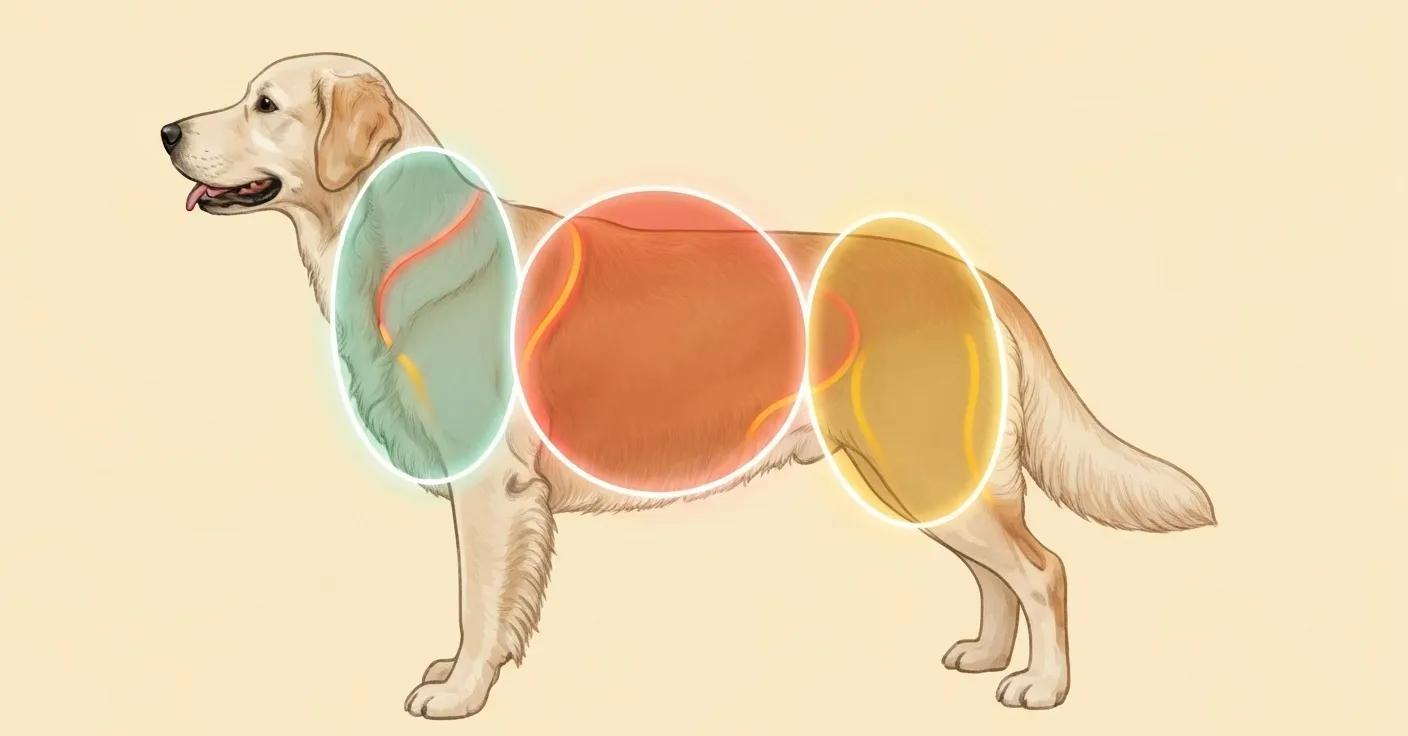
Chronological age sets the question. Body composition answers it. Two markers do most of the work: Body Condition Score (BCS), which estimates fat coverage, and Muscle Condition Score (MCS), which estimates lean mass independent of weight. A senior dog can be at an ideal BCS of 5 out of 9 and still have moderate muscle wasting along the spine and hindquarters — a condition that’s invisible if you only watch the scale (WSAVA, 2013; Freeman et al., 2017). MCS is the more revealing number once dogs cross into senior years. If you’ve never seen the chart, ask your vet to walk you through it at the next visit.
Why blanket exercise reduction backfires
There’s a stubborn intuition that older bodies need rest the way tired bodies need sleep. For dogs it isn’t true, and the mechanism is well documented. Skeletal muscle in older mammals enters a state researchers call anabolic resistance: the same dose of dietary amino acids triggers a smaller muscle-protein-synthesis response than it would in a younger animal, and inactivity makes that resistance worse (Hayek, 2019; Dickinson et al., 2011). When you remove the mechanical loading signal — the controlled stress of walking, climbing, sniffing through terrain — you accelerate sarcopenia, the age-related loss of muscle mass. Joints lose their support structure. Tendons stiffen. The dog’s center of gravity shifts to compensate, which puts uneven load on the joints that are already arthritic.
Within two to three weeks of meaningful inactivity, a healthy senior dog can lose measurable lean mass. Within a couple of months, the difference is visible to the naked eye in the very places Priya had noticed on Banjo: the temporalis muscles above the eyes, the topline, the thigh. The thing she was trying to prevent by resting him was being caused by the rest itself.
The goal isn’t more exercise or less exercise. It’s calibrated exercise: enough sustained, low-impact loading to maintain muscle and joint health, modulated for the individual dog’s pain status, cardiac function, and body composition. The companion piece on senior dog muscle-building exercises goes deeper into the specific movement patterns that build lean mass without overloading aging joints.
Daily duration targets by life stage
There’s no universal number, but the following ranges work as starting points for healthy senior dogs without diagnosed orthopedic or cardiac disease. Split into two or three sessions rather than one long block, and always include a five-minute warm-up of slow flat walking before anything more demanding (Millis & Levine, 2014).
- Small senior dogs (under 10 kg): 20–40 minutes of total daily activity, divided into 2–3 outings. Most can sustain modest pace; many tire faster than owners expect.
- Medium senior dogs (10–25 kg): 30–60 minutes, divided into 2–3 outings. Adjust downward for arthritic dogs, upward for fit dogs with minimal joint disease.
- Large senior dogs (25–40 kg): 40–75 minutes, divided into 2–3 outings. This group benefits most from swapping high-impact for low-impact rather than reducing volume.
- Giant senior dogs (40+ kg): 30–60 minutes total, almost always divided. Giant breeds are over-represented in cardiac and orthopedic conditions and need the most careful calibration.
These are healthy-dog baselines. Dogs with diagnosed arthritis, hip dysplasia, intervertebral disc disease, or cardiac murmurs need a customized plan from a veterinarian or a certified canine rehabilitation practitioner. The numbers also assume mild-to-moderate weather; in heat or cold extremes the targets shift, sometimes by a lot.
Intensity over duration
For senior dogs the dial that matters most isn’t how long but how hard. A 40-minute meandering sniff walk through a leafy neighborhood is a fundamentally different stimulus than a 40-minute brisk trot on hot pavement. The first builds endurance and stimulates cognition without spiking joint load; the second can leave an arthritic Lab limping by evening. Keep heart rate moderate. Watch for the early tells — sustained panting after rest, a hitch in the stride, reluctance to continue — and end the session before those tells become refusal.
Low-impact alternatives that actually work
This is where I spend most of my time with senior-dog owners, because the answer to “what should we do instead of long pavement walks?” is almost always richer than they expect.
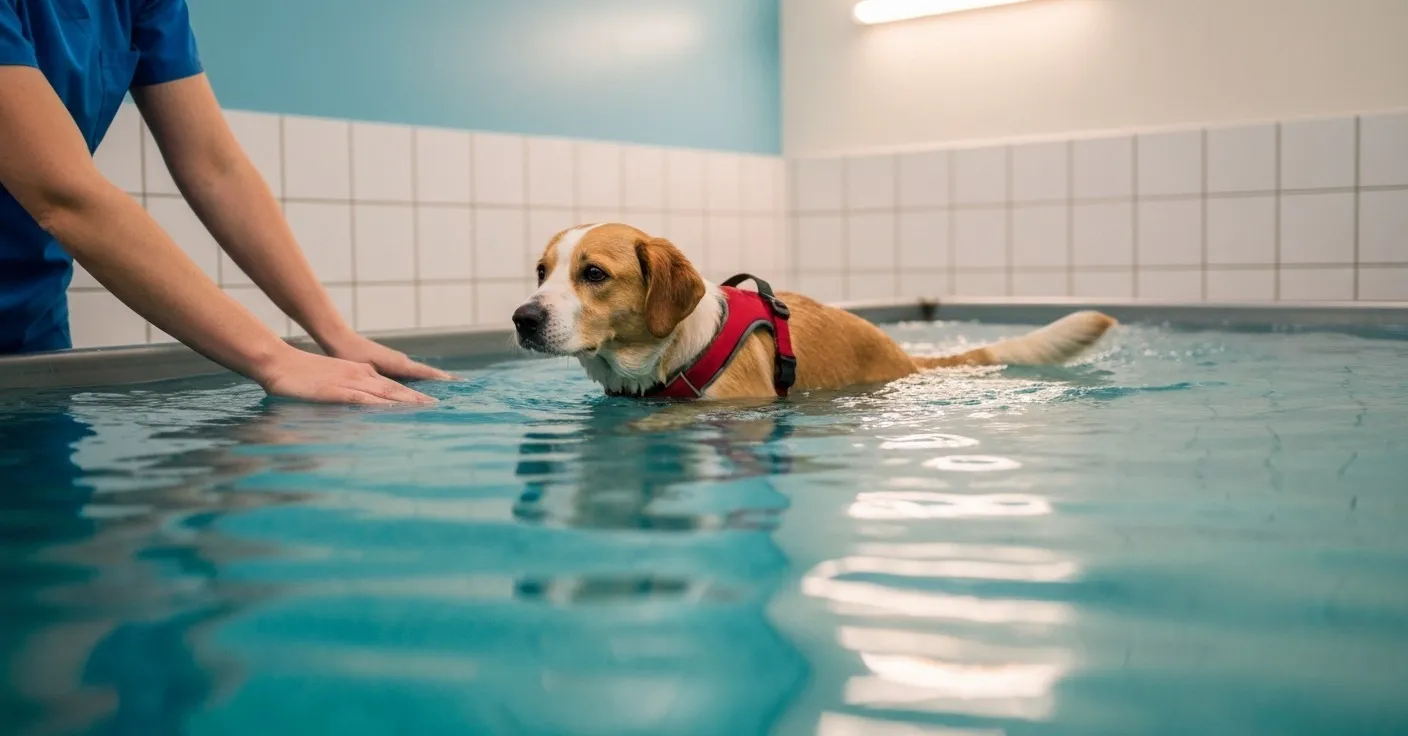
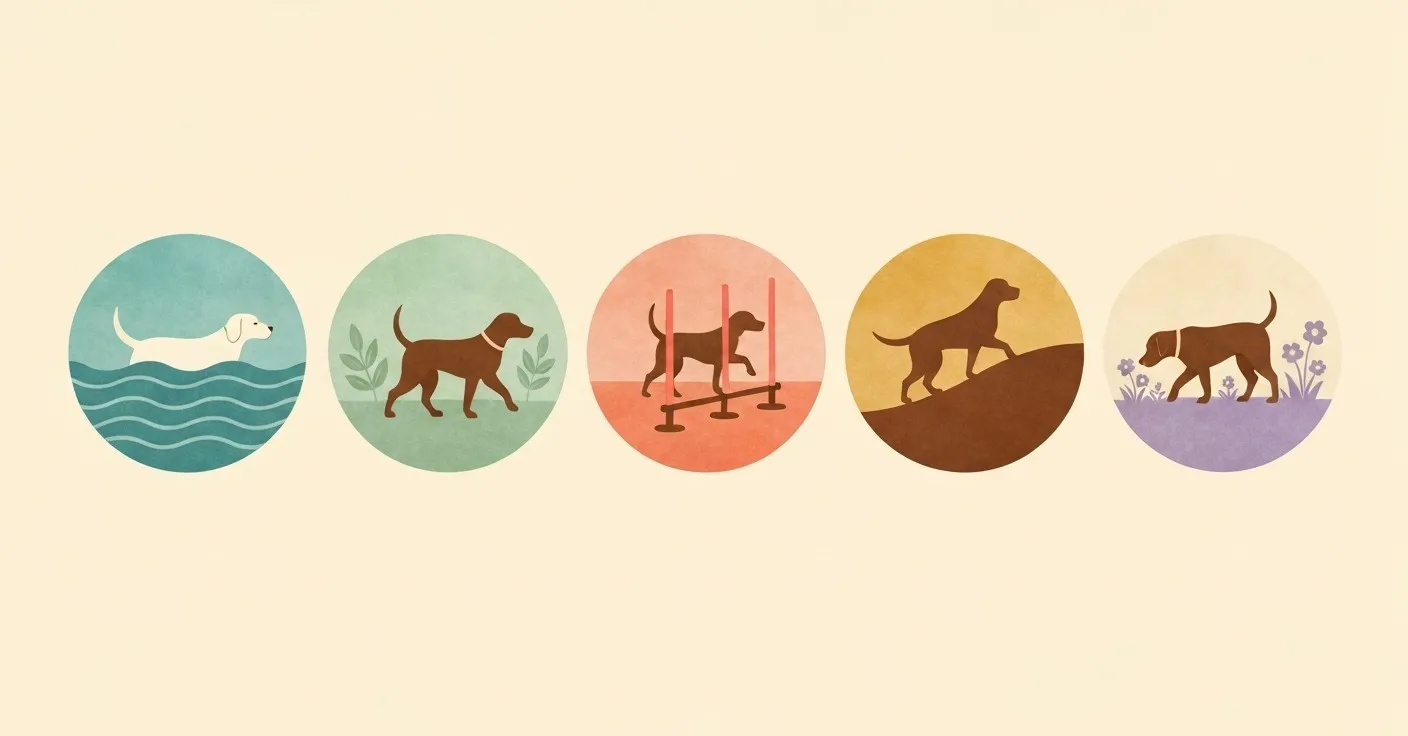
Hydrotherapy and swimming. Water offsets gravity and lets a dog move joints through a fuller range of motion than they can manage on land. Underwater treadmill work, run by a certified canine rehab therapist, is the gold-standard rehab modality for senior dogs with osteoarthritis, and there’s solid evidence it improves gait and reduces lameness in dogs with hip dysplasia (Marsolais et al., 2003). Free swimming is also valuable, but it’s a higher-intensity workout than most owners realize. Five minutes of swim is not equivalent to five minutes of walk. Start short and watch for fatigue.
Controlled leash walks on soft surfaces. Grass, packed dirt, sand at low tide, forest trails without aggressive grades. The cushioning matters. Pavement is the worst common surface for arthritic dogs because it transmits impact straight up the limb. Where pavement is unavoidable, slow the pace and shorten the session.
Cavaletti work. Cavaletti are low poles set on the ground, spaced so the dog has to deliberately pick up each foot and place it as they walk through. This sounds trivial. It’s not. Cavaletti work strengthens core stabilizers, improves proprioception (the dog’s awareness of where its limbs are in space), and is one of the most evidence-supported rehab exercises for senior canine patients (Millis & Levine, 2014). You can buy a set or build one from PVC pipe and bricks.
Gentle hill walking. Inclines load the hindquarters differently than flat ground and can help maintain rear-end muscle, which is usually the first to atrophy. Choose grades that feel like a “gentle ramp,” not a “climb.” Walking up the hill loads the rear; walking down loads the front and is harder on arthritic shoulders, so for some dogs the descent is what to limit.
Sniffaris. This is the technical term I’ve stolen from canine behaviorists for a walk where the only goal is letting the dog sniff. No agenda. No distance target. The owner follows the dog’s nose. The cognitive workload of olfactory processing in dogs is genuinely high — research suggests scent-based enrichment reduces stress hormones and supports cognitive function in aging dogs (Adams et al., 2016) — and a thirty-minute sniffari can leave a senior dog as pleasantly tired as a longer brisk walk, with a fraction of the joint impact.
Reading the warning signs
The hardest part of a senior exercise plan is recognizing the difference between healthy fatigue, over-exertion, and under-activity. They look superficially similar from the outside.
Signs of over-exertion during or after activity:
- Stride length shortening or a new hitch in one limb.
- Panting that persists more than 15–20 minutes after rest in normal-temperature conditions.
- Reluctance to continue or sitting/lying down mid-walk.
- Visible stiffness or limping the following morning.
- A drop in appetite that night or the next day.
Signs of chronic under-activity, which are easier to miss:
- Muscle loss along the spine, shoulders, or thighs (the MCS markers).
- New stiffness on rising, especially after long rest.
- Weight gain despite unchanged food.
- Loss of confidence on stairs, slick floors, or curbs.
- Increased daytime sleeping with reduced engagement during waking hours.
A healthy senior dog after a properly calibrated session should be pleasantly tired — willing to settle but able to rise and move normally. They should not need 24 hours to recover from a 30-minute walk. If they do, the load was too high or there’s an underlying condition that hasn’t been worked up yet.
Weather adjustments
Senior dogs handle weather extremes worse than younger adults do. Their thermoregulation is less efficient, their cardiovascular reserve is smaller, and arthritic joints stiffen noticeably in cold. In hot weather, shift exercise to dawn or after sunset, choose shaded routes, and check pavement temperature with the back of your hand — if it’s uncomfortable for five seconds, it’s too hot for paws and reflects heat back up the dog (Hand & Lewis, 2010). Brachycephalic seniors (Bulldogs, Pugs, Frenchies) need particular caution in heat; their margin for error is small. In cold weather, longer warm-ups matter more, and a fleece or insulated coat is reasonable for thin-coated or arthritic dogs below roughly 4°C / 40°F.
Nutrition, recovery, and the muscle equation
Exercise is one of two levers that maintain muscle in older dogs. The other is dietary protein, specifically the leucine load delivered at each meal. Aging muscle responds less to amino acid signaling, which means a senior dog needs a higher-quality protein intake to trigger the same synthesis response a young dog gets from a smaller dose (Churchill, 2017; Laflamme, 2018). Exercise without adequate protein accelerates breakdown rather than building. Protein without exercise mostly gets oxidized or stored. The two work together or not at all — there’s a deeper breakdown in the protein-for-dogs piece.
Recovery is the third leg. Senior dogs need more sleep than young adults and benefit from supportive bedding that keeps joints off cold hard surfaces. After exercise, encourage water intake, allow at least 30–60 minutes of quiet rest before food, and give 24 hours of lower-intensity activity between higher-load sessions.
For dogs whose total daily protein intake is hard to achieve through food alone — picky seniors, dogs eating reduced portions for weight management, dogs in active rehab — a targeted supplement can help bridge the gap. Petterm Muscle Gain Soft Chews are formulated around a leucine-forward amino acid profile that supports muscle maintenance alongside dietary protein and a calibrated exercise plan. They’re a supplement to a complete diet, not a replacement. The helping underweight dogs gain muscle article covers how to combine nutrition and movement for dogs already showing visible muscle loss.
Frequently asked questions
Is it ever too late to start an exercise program with a senior dog?
Almost never. Even dogs in their last few years of life respond to gentle, progressive activity with improved muscle tone, better gait, and often noticeably brighter mood. The protocol just gets gentler. Start with five-minute slow walks twice a day and build by no more than 10% per week, watching closely for next-day stiffness. Dogs with diagnosed cardiac or severe orthopedic disease need a vet or rehab therapist to design the plan.
Should I push through if my dog seems reluctant to walk?
No, but investigate why. Reluctance in a senior dog is more often a pain signal than a behavior problem. Common causes are undiagnosed arthritis, lumbosacral disease, or dental pain (yes — dental pain can blunt a dog’s interest in everything, including walks). A thorough exam, often including imaging, comes before any assumption that the dog is just being stubborn.
How do I know if hydrotherapy is right for my dog?
Hydrotherapy supports most senior dogs with osteoarthritis, hip dysplasia, recovering from orthopedic surgery, or carrying excess weight that’s making land exercise painful. It isn’t appropriate for dogs with active skin infections, uncontrolled seizure disorders, or severe cardiac disease. Ask your vet for a referral to a certified canine rehabilitation practitioner (CCRP or CCRT credential).
My senior dog wants to run with younger dogs at the park. Is that okay?
In short bursts, with breaks, on soft surfaces, and only if your dog initiates it: usually fine, and probably good for mental health. The risk is the senior trying to keep up for too long because of social pressure or excitement. Cap the high-intensity stretch at five to ten minutes and offer water and a quiet sniff break. End the session before your dog is the one slowing down the pack.
What’s the role of joint supplements?
Glucosamine, chondroitin, omega-3s, and green-lipped mussel extract have varying levels of evidence for supporting joint comfort in aging dogs (Roush et al., 2010). They help maintain joint health rather than rebuild lost cartilage. Supplements work best as part of a package: appropriate weight, calibrated exercise, adequate protein, and a vet-led pain management plan when needed.
Does mental exercise really replace physical exercise?
It doesn’t replace it, but it stacks well on reduced physical days. Puzzle feeders, scent games, training sessions for new low-impact tricks, and food-dispensing toys all provide cognitive load that supports brain health and reduces frustration on lower-activity days (Adams et al., 2016). Use mental enrichment to fill the gap on rest days, not as a permanent substitute for movement.
How often should I reassess the exercise plan?
Every three months for healthy seniors, and any time the dog has a notable change — a new diagnosis, weight shift of more than 5%, change in gait, or change in willingness. Reassessment doesn’t always mean reducing; sometimes it means progressing a dog who’s been doing well.
When to contact your veterinarian
A reasonable home-managed approach for most healthy senior dogs is to keep moving, stay observant, and adjust intensity downward at the first signs of joint discomfort or fatigue. Recheck Body Condition Score and Muscle Condition Score monthly. Keep a simple log of daily activity duration and any next-day stiffness; patterns are easier to spot in writing than in memory.
Call your veterinarian within a week if your dog shows a persistent new limp, reluctance to climb stairs or jump that lasts more than a few days, visible muscle wasting over the topline or hindquarters, or an unexplained change in exercise tolerance. Seek same-day or urgent care for sudden hindlimb weakness or paralysis, collapse during or after exercise, signs of heat stroke (profuse panting, brick-red gums, disorientation), or any acute non-weight-bearing lameness. These can signal cardiac, neurological, or orthopedic emergencies that need imaging and intervention rather than a rest day.
References
-
Greer, K.A., Canterberry, S.C., Murphy, K.E. (2007). “Statistical analysis regarding the effects of height and weight on life span of the domestic dog.” Research in Veterinary Science, 82(2), 208–214.
-
Bray, E.E., et al. (2015). “Effects of maternal investment, temperament, and cognition on guide dog success.” Proceedings of the National Academy of Sciences, 112(35), 10832–10837.
-
Hayek, M.G. (2019). “Age-related changes in lean body mass and energy metabolism in dogs.” Journal of Animal Physiology and Animal Nutrition, 103(S1), 18–22.
-
Dickinson, J.M., et al. (2011). “Aging differentially affects human skeletal muscle amino acid transporter expression when essential amino acids are ingested after exercise.” Clinical Nutrition, 30(5), 630–636.
-
Freeman, L.M., et al. (2017). “Body composition in senior dogs: a cross-sectional study.” Journal of Veterinary Internal Medicine, 31(S1), 81.
-
WSAVA Global Nutrition Committee (2013). “Body Condition Score and Muscle Condition Score Guidelines for Dogs.” World Small Animal Veterinary Association.
-
Churchill, J.A. (2017). “Increase in senior and geriatric pet patients: nutrition in the senior years.” Veterinary Clinics of North America: Small Animal Practice, 47(3), 701–712.
-
Laflamme, D.P. (2018). “Pet food safety: dietary protein.” Topics in Companion Animal Medicine, 23(3), 154–157.
-
Millis, D.L., Levine, D. (2014). Canine Rehabilitation and Physical Therapy, 2nd ed. St. Louis: Elsevier Saunders.
-
Marsolais, G.S., McLean, S., Derrick, T., Conzemius, M.G. (2003). “Kinematic analysis of the hind limb during swimming and walking in healthy dogs and dogs with surgically corrected cranial cruciate ligament rupture.” Journal of the American Veterinary Medical Association, 222(6), 739–743.
-
Adams, B., Chan, A., Callahan, H., Milgram, N.W. (2016). “The canine as a model of human cognitive aging: recent developments.” Progress in Neuro-Psychopharmacology and Biological Psychiatry, 24(5), 675–692.
-
Hand, M.S., Lewis, L.D. (2010). Small Animal Clinical Nutrition, 5th ed. Topeka: Mark Morris Institute.
-
Roush, J.K., et al. (2010). “Evaluation of the effects of dietary supplementation with fish oil omega-3 fatty acids on weight bearing in dogs with osteoarthritis.” Journal of the American Veterinary Medical Association, 236(1), 67–73.
Researched and reviewed by the Petterm Editorial Team · Last reviewed May 2026
This article is for educational purposes and is not veterinary medical advice. Petterm products are not intended to diagnose, treat, cure, or prevent any disease. Results may vary. Always consult your veterinarian before changing an exercise plan or introducing a new supplement, especially if your dog has an existing orthopedic, cardiac, neurological, or metabolic condition, takes medication, or is recovering from surgery.